

Introduction
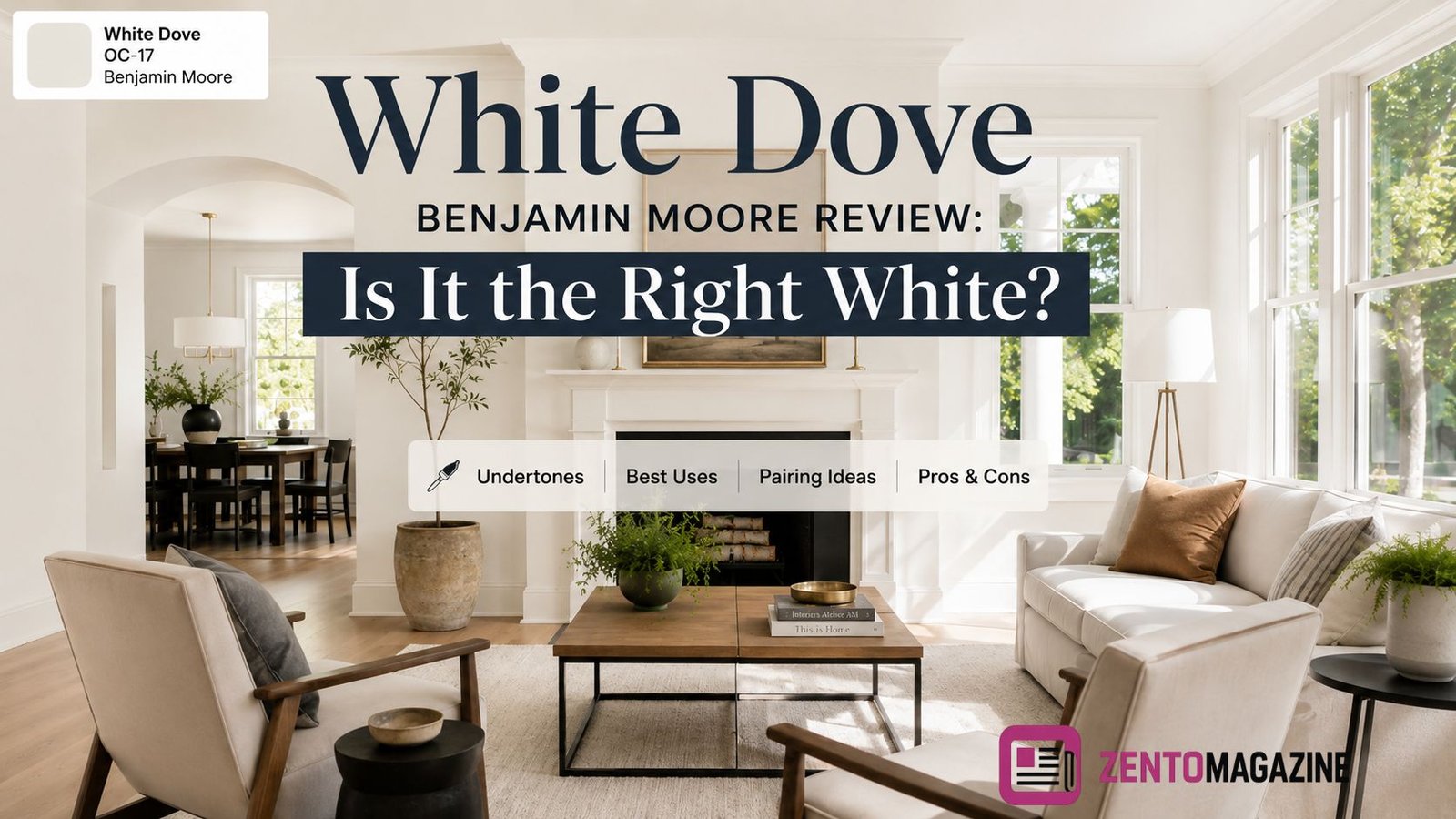
Choosing the right white paint sounds simple until you stand in front of a wall of paint chips. Some whites look too yellow, some feel too gray, and others turn cold once they are painted across a full room. That is why white dove benjamin moore has become such a trusted choice for homeowners, designers, and renovators who want a white that feels soft, classic, and easy to live with.
White Dove is not a harsh gallery white. It has a gentle warmth that makes a room feel calm without looking overly creamy. This balance is the main reason it works in so many spaces, from kitchens and living rooms to trim, cabinets, bedrooms, and even exteriors.
In this review, we will look at what makes White Dove popular, how it behaves in different lighting, where it works best, what colors pair well with it, and when another white paint color may be a better choice.
| Label | Information |
|---|---|
| Paint Name | White Dove |
| Brand | Benjamin Moore |
| Color Code | OC-17 |
| Color Family | Off-White |
| Paint Type | Interior and Exterior Paint |
| Undertones | Soft Warm Creamy Undertones |
| LRV | 83.16 |
| Appearance | Clean, Soft White |
| Best For | Walls, Trim, Cabinets |
| Popular Style | Traditional, Modern Farmhouse |
| Main Benefit | Bright Yet Warm Look |
| Pairs Well With | Wood, Gray, Navy, Green |
| Overall Feel | Timeless and Welcoming |
What Is White Dove Benjamin Moore?
White Dove Benjamin Moore is officially known as White Dove OC-17. It is part of Benjamin Moore’s Off White Collection and is described as a clean and classic white. It is also one of the brand’s most popular white paint colors, especially for people who want a soft white that still feels fresh.
The color has an LRV of 83.16, which means it reflects a strong amount of light but is not as bright as ultra-crisp whites. In simple words, it gives brightness without feeling sharp. This makes it easier to use in real homes where lighting, furniture, flooring, and décor all affect how paint looks.
White Dove is often chosen for walls, ceilings, trim, kitchen cabinets, built-ins, doors, and exterior details. Its biggest strength is flexibility. It can look polished in a modern home, warm in a traditional room, and relaxed in a farmhouse-style space.
Why It Is Popular
White Dove has stayed popular because it solves a common paint problem: many people want white walls, but they do not want their home to feel cold or unfinished. White Dove offers a softer result. It has enough warmth to feel welcoming, yet it remains clean enough to work as a main neutral.
Another reason people love it is that it does not demand one specific design style. It works with natural wood, stone, brass, black hardware, soft gray, beige, navy, green, and warm neutral fabrics. This makes it useful for homeowners who want a long-lasting color rather than a trendy shade that may feel dated quickly.
It is also a strong choice for people updating older homes. A very bright white can sometimes look too new or too stark against traditional trim, wood floors, or classic architecture. White Dove feels more settled and natural in those spaces.
Undertones
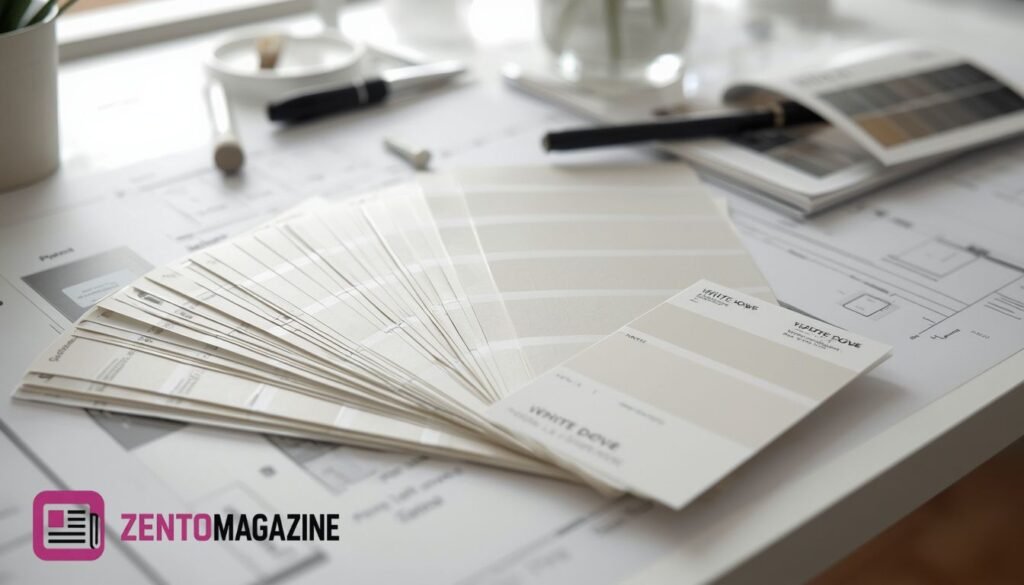
The undertones of white dove benjamin moore are soft and warm. It is often described as a warm white, but it is not a deep cream or yellow white. Its warmth is gentle, which is why it can still look clean in many rooms.
In some spaces, White Dove may show a slight creamy appearance. In others, it can look like a balanced off-white with a subtle gray softness. The surrounding colors matter a lot. If you place it beside a cool blue-gray, White Dove may look warmer. If you place it beside a beige or cream, it may look more neutral and fresh.
This is why sample testing is important. A paint color does not exist alone. It reacts to flooring, countertops, furniture, natural light, artificial bulbs, and even outdoor greenery reflecting through windows.
LRV Explained
LRV stands for Light Reflectance Value. It measures how much light a paint color reflects. The scale runs from 0 to 100. A color with 0 absorbs all light, while a color with 100 reflects all light.
White Dove’s LRV of 83.16 places it in the bright off-white range. It reflects plenty of light, but it is not as bright as some cleaner whites such as Benjamin Moore Simply White, which has a higher LRV. This slightly lower brightness helps White Dove feel softer and less stark.
For small rooms, this can be helpful because it keeps the space bright without making the walls feel flat. For larger rooms, it creates an elegant background that does not compete with furniture or décor.
How Lighting Changes It
Lighting can completely change how White Dove looks. This is true for all white paints, but it is especially important with off-whites because their undertones are subtle.
In north-facing rooms, the light is often cooler and softer. White Dove can help balance that coolness, especially on trim and ceilings. It may still look slightly muted, but it usually avoids feeling icy.
In south-facing rooms, the light is warmer and brighter for much of the day. White Dove may appear lighter, creamier, and more glowing. This can be beautiful in living rooms, bedrooms, and kitchens where you want a comfortable feel.
East-facing rooms receive brighter morning light and cooler light later in the day. White Dove may look fresh in the morning and softer by afternoon. West-facing rooms get stronger warm light later in the day, so White Dove can appear richer and warmer in the evening.
Artificial lighting also matters. Warm bulbs can make White Dove look creamier, while cooler bulbs can make it look more neutral. For the best result, test the sample under the same lighting you use every day.
Best Rooms
White Dove works beautifully in living rooms because it creates a calm background. It does not shout for attention, which allows furniture, artwork, rugs, and natural textures to stand out. If your living room has wood flooring, linen curtains, or neutral sofas, White Dove can bring everything together in a soft and comfortable way.
In bedrooms, it feels peaceful and warm. It is a good option for people who want a light room but do not want a bright white that feels too energetic. Paired with soft bedding, wood tones, and warm lamps, it can create a relaxed space that feels easy to unwind in.
Bathrooms can also benefit from White Dove, especially when paired with marble, warm tile, brass fixtures, or soft gray accents. However, in bathrooms with very cool lighting or cool-toned tiles, it is important to test first. The wrong lighting can make any white look different than expected.
Kitchen Use
Kitchens are one of the most common places to use white dove benjamin moore. It works well on walls, cabinets, trim, and even ceilings. The color has enough warmth to keep a kitchen from feeling sterile, but it still looks clean and polished.
On cabinets, White Dove is especially popular because it pairs well with many countertop materials. It can work with marble, quartz, butcher block, soapstone, and granite, depending on the undertones in the surface. It also looks good with classic subway tile, handmade tile, and simple stone backsplashes.
For hardware, White Dove is flexible. Black hardware creates contrast and a modern feel. Brass adds warmth and elegance. Nickel or chrome gives a cleaner, more traditional look. This flexibility makes it a safe choice for kitchen updates where you want the cabinets to stay timeless.
Trim and Ceilings
White Dove is a strong trim color because it provides contrast without looking too sharp. If your walls are beige, greige, taupe, muted green, soft blue, or warm gray, White Dove can frame the room in a clean but gentle way.
It can also be used on ceilings, especially when the walls are a warm neutral. Some homeowners use White Dove on both walls and trim, changing only the sheen. For example, walls may be painted in eggshell and trim in satin or semi-gloss. This creates a layered look without introducing another white.
Using the same white across walls, trim, and ceiling can make a room feel larger and more seamless. This works especially well in smaller rooms, hallways, and open-concept spaces.
Exterior Use
White Dove can look beautiful on home exteriors, but outdoor light is much stronger than indoor light. Because of that, paint colors often appear brighter outside. White Dove may look cleaner and lighter on an exterior than it does indoors.
It works well on siding, trim, shutters, porch details, and brick exteriors. It pairs nicely with black windows, natural stone, warm wood doors, charcoal roofing, and deep green landscaping.
However, exterior samples are very important. Paint a large sample board and view it in morning, afternoon, and evening light. Also check how it looks beside roofing, stone, brick, and neighboring exterior finishes.
Color Pairings
White Dove pairs well with many warm and balanced neutrals. Greige shades, beige tones, soft taupes, and warm grays often look natural beside it. These combinations create a calm and layered home palette.
For contrast, deep colors can work beautifully. Navy blue, charcoal, forest green, deep brown, and muted black all pair well with White Dove. These darker colors can be used on doors, islands, accent walls, built-ins, or furniture.
Natural wood is another strong match. Light oak gives White Dove a fresh and airy feel. Walnut makes it look rich and classic. Rustic wood creates a relaxed farmhouse effect. Because White Dove is not too cold, it usually sits comfortably beside natural materials.
White Dove vs Simply White
Benjamin Moore Simply White is brighter and a bit crisper than White Dove. It has a higher LRV, so it reflects more light. If you want a cleaner and brighter white, Simply White may be a better choice.
White Dove is softer and slightly more muted. It is better for people who want warmth without a strong yellow look. It also tends to feel more traditional and relaxed compared with the brighter look of Simply White.
For modern kitchens, Simply White can feel fresh and sharp. For cozy kitchens, classic trim, and warm interiors, White Dove often feels easier to live with.
White Dove vs Chantilly Lace
Chantilly Lace is one of Benjamin Moore’s cleanest and brightest whites. It is often chosen when someone wants a pure, crisp white with very little warmth. Compared with Chantilly Lace, White Dove looks warmer, softer, and more off-white.
If your design style is modern, minimal, or high contrast, Chantilly Lace may be the stronger option. If your home has warm floors, traditional details, or soft neutral décor, White Dove may feel more natural.
The main difference is mood. Chantilly Lace feels crisp and clean. White Dove feels gentle and inviting.
White Dove vs Swiss Coffee
Swiss Coffee is another popular Benjamin Moore off-white. It is warmer and creamier than White Dove. If you want a cozy, creamy white, Swiss Coffee may be a good option.
White Dove feels a little cleaner and less creamy. This makes it more flexible for people who want warmth but still want a fresh white appearance.
Both colors are beautiful, but the best choice depends on the room. Swiss Coffee can be lovely in warm, traditional, or vintage-inspired spaces. White Dove is often easier to use when you want a balance between soft and clean.
Pros
One of the biggest benefits of white dove benjamin moore is its versatility. It works in many rooms, with many styles, and alongside many finishes. It is not overly trendy, which makes it a safer long-term paint choice.
It also has a warm, welcoming quality. Unlike stark whites, it does not usually make a room feel cold. This is helpful in homes where comfort matters as much as style.
White Dove is also useful for whole-home color plans. You can use it on trim throughout the house, on walls in main areas, or on cabinets in the kitchen. Its soft appearance allows other design details to stand out.
Cons
White Dove is not perfect for every space. In some lighting, it can look creamier than expected. If you want a pure white with no warmth, this may not be the right choice.
It can also be affected by surrounding finishes. If your tile, countertop, or flooring has cool undertones, White Dove may look slightly yellow beside it. This does not mean the color is bad, but it does mean it needs to be tested carefully.
Another possible downside is that it may not provide enough crispness for very modern spaces. If your goal is a sharp white-and-black design, a brighter white may give you the cleaner contrast you want.
Who Should Choose It?
White Dove is a good choice for homeowners who want a soft white that feels classic, warm, and easy to decorate around. It is especially helpful if you want a white paint that does not feel too cold.
It works well in traditional homes, transitional interiors, modern farmhouse spaces, and relaxed contemporary rooms. It is also a strong option for cabinets, trim, built-ins, and walls where you want a timeless look.
You may want to choose another white if your room has very cool finishes, if you want a pure bright white, or if your design plan needs strong contrast. In those cases, testing White Dove beside cleaner whites will help you decide.
Testing Tips
Before painting a full room, always test White Dove in the actual space. Do not rely only on online photos or small paint chips. Online images can be affected by editing, camera settings, and screen brightness.
Paint a large sample on poster board or use a peel-and-stick sample. Move it around the room and check it on different walls. Look at it in the morning, afternoon, evening, and under artificial light.
Also compare it beside your flooring, countertops, backsplash, furniture, and trim. A white paint color can look perfect on one wall and different beside a fixed finish. Testing helps you avoid expensive mistakes.
Best Sheens
The right sheen depends on where you use the paint. For walls, eggshell or matte finishes are common choices because they give a soft look and hide minor wall imperfections better than glossy finishes.
For trim, doors, and cabinets, satin, semi-gloss, or a durable cabinet-grade finish is often preferred. These finishes are easier to clean and give woodwork a polished appearance.
For ceilings, flat paint is usually best because it reduces glare and hides surface flaws. If you use White Dove on walls, trim, and ceiling, changing the sheen can create subtle depth while keeping the color consistent.
Final Verdict
So, is white dove benjamin moore the right white? For many homes, yes. It is one of those rare white paint colors that feels clean without being cold and warm without being too creamy. That balance is what makes it so useful.
It is especially strong for cabinets, trim, bedrooms, living rooms, kitchens, and classic interiors. It pairs well with wood, stone, warm neutrals, deep accents, and many popular home finishes.
Still, it should not be chosen blindly. Like every white paint, White Dove changes with lighting and surroundings. The smartest approach is to test it in your home before making the final decision. If it works with your light and finishes, White Dove can give your space a timeless, soft, and beautifully finished look.
Frequently Asked Questions
Is White Dove Benjamin Moore a warm or cool white?
White Dove Benjamin Moore is generally considered a warm white. It has soft creamy undertones that make rooms feel inviting without looking overly yellow or beige.
Does White Dove Benjamin Moore work well on kitchen cabinets?
Yes, White Dove is one of the most popular cabinet colors from Benjamin Moore. Its balanced warmth creates a timeless look that works with many countertop materials and hardware finishes.
What is the LRV of White Dove Benjamin Moore?
White Dove has a Light Reflectance Value (LRV) of 83.16. This means it reflects a large amount of light while still maintaining a soft, comfortable appearance.
How does White Dove Benjamin Moore compare to Simply White?
Simply White is brighter and crisper, while White Dove appears slightly softer and warmer. Homeowners who prefer a cozy, classic white often choose White Dove.
Is White Dove Benjamin Moore a good choice for the whole house?
Yes, many homeowners use White Dove throughout their homes on walls, trim, ceilings, and cabinets. Its versatility allows it to work well in a variety of rooms and design styles.
