

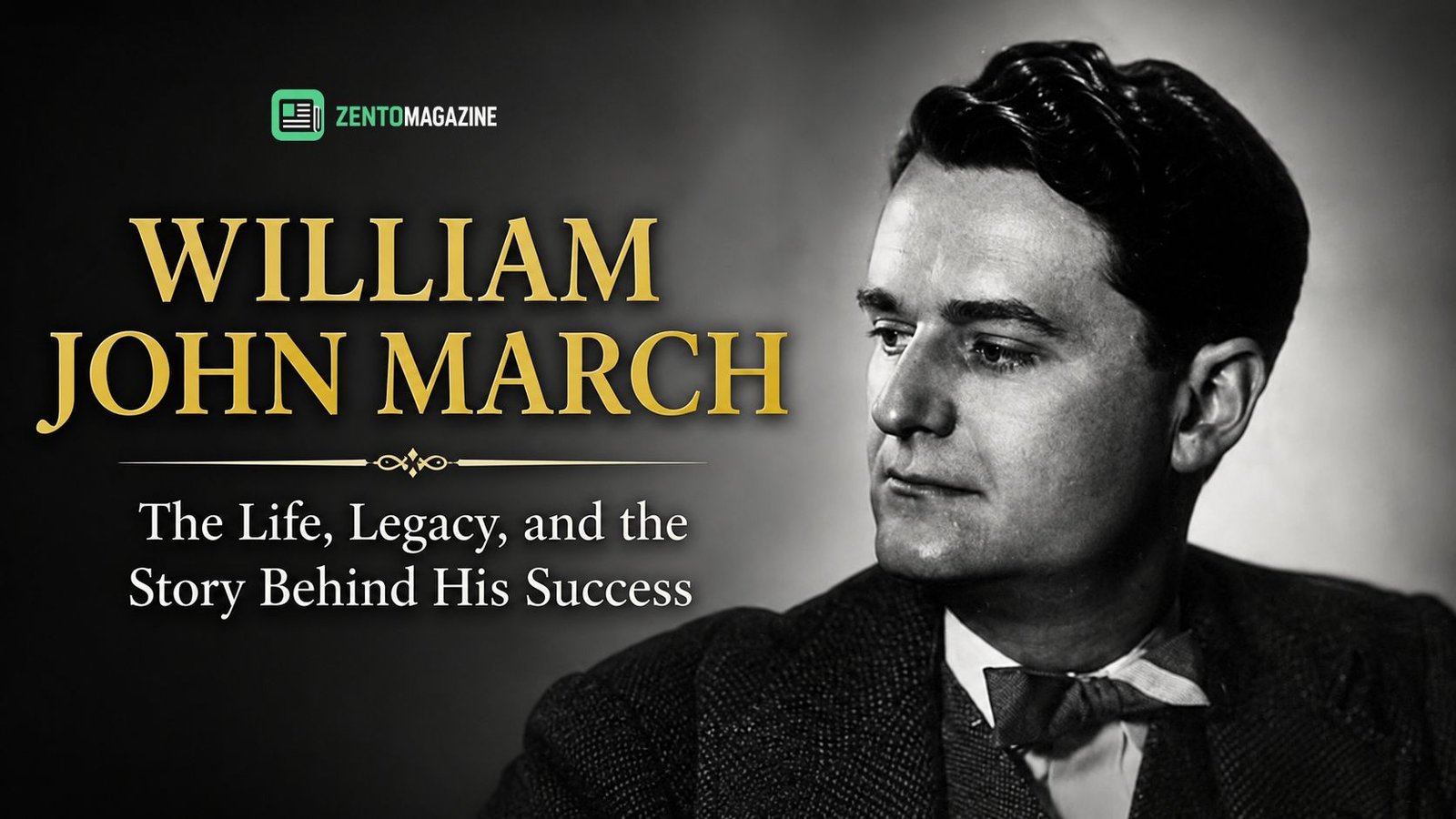
Introduction
The story of William John March is one of determination, resilience, and remarkable talent. Although many readers know him simply as William March, his birth name was William Edward Campbell. He became one of the most respected American writers of the twentieth century, earning recognition for his powerful novels, unforgettable characters, and deep understanding of human nature.
What makes his journey especially inspiring is that success did not come easily. He grew up in poverty, left school at a young age, experienced the horrors of war, and faced personal struggles throughout his life. Yet despite these challenges, he built a respected literary career and left behind works that continue to be studied and admired decades after his death.
His life proves that true success is not always measured by fame alone. It is often defined by perseverance, personal growth, and the lasting impact one leaves on others.
BIO
| Label | Information |
|---|---|
| Full Name | William March |
| Birth Name | William Edward Campbell |
| Date of Birth | September 18, 1893 |
| Place of Birth | Mobile, Alabama, USA |
| Date of Death | May 15, 1954 |
| Nationality | American |
| Profession | Novelist and Short Story Writer |
| Known For | Company K and The Bad Seed |
| Military Service | United States Marine Corps |
| Major Honors | Navy Cross and Distinguished Service Cross |
| Literary Genre | Fiction and Psychological Drama |
| Notable Legacy | Influential American Author |
| Years Active | 1920s–1954 |
Early Life and Humble Beginnings
William March was born on September 18, 1893, in Mobile, Alabama. He came from a large family and spent much of his childhood in difficult financial circumstances. His father worked in the lumber industry, and the family frequently moved in search of employment opportunities.
Because of these hardships, March was unable to enjoy a traditional education. He left school at an early age and began working while still a teenager. Many people in similar situations would have abandoned their dreams, but March remained determined to improve his future.

Even during his youth, he showed an interest in reading and writing. Literature became a source of inspiration and escape. Although he lacked formal educational advantages, he developed a strong curiosity about the world around him.
These early experiences later influenced his writing, allowing him to create realistic characters and emotionally powerful stories.
The Search for Opportunity
As a young man, March worked in a law office and saved money to continue his education. He attended courses at Valparaiso University and later studied law at the University of Alabama. Unfortunately, financial limitations prevented him from completing his studies.
Rather than giving up, he moved to New York City in search of greater opportunities. The move exposed him to a broader world and introduced him to new ideas, cultures, and experiences.
Living in New York was not always easy. He worked hard to support himself while trying to build a better future. These years taught him discipline, independence, and persistence—qualities that would later contribute to his success as both a businessman and a writer.
A Life-Changing Experience in World War I
One of the most important turning points in March’s life came during World War I. In 1917, he volunteered for the United States Marine Corps and served in some of the war’s most dangerous battles.
His bravery on the battlefield earned him some of the highest military honors available, including the Distinguished Service Cross, the Navy Cross, and the French Croix de Guerre. These awards reflected extraordinary courage under extremely difficult conditions.
However, the war left lasting emotional scars. The violence and suffering he witnessed deeply affected him and shaped his understanding of human nature. Many of his later literary works drew inspiration from these experiences.
The lessons he learned during wartime became a foundation for his writing career. Instead of ignoring painful memories, he transformed them into meaningful stories that helped readers understand the realities of conflict.
Building a Successful Career
After returning from military service, March joined the Waterman Steamship Company. He began in a relatively modest position but gradually climbed the corporate ladder through hard work and dedication.
His business career was surprisingly successful. Over time, he became a respected executive and held important leadership roles within the company.
This period of his life demonstrates an often-overlooked aspect of his success. Many people know him as a writer, but he also excelled in business.
Balancing professional responsibilities while pursuing creative interests required exceptional discipline. March managed to build financial stability while continuing to develop his literary skills.
His success in business provided him with the freedom to focus more seriously on writing, ultimately helping him achieve his long-term goals.
The Beginning of His Writing Journey
While working in business, March began writing short stories. Writing served as both a creative outlet and a way to process his experiences.
His first published works quickly attracted attention. Literary magazines recognized his talent, and readers appreciated his thoughtful storytelling and realistic characters.
Unlike many writers who chase trends, March remained committed to authenticity. He wrote about real emotions, difficult choices, and the complexities of human behavior.
This commitment to honesty became one of the defining features of his work and helped distinguish him from many of his contemporaries.
The Success of Company K
March’s first major breakthrough came with the publication of Company K in 1933. The novel drew heavily from his wartime experiences and offered a powerful portrayal of soldiers during World War I.
Unlike traditional war stories that focused mainly on heroism, Company K explored the psychological effects of combat. It examined fear, trauma, loss, and the emotional burden carried by soldiers.
Critics praised the novel for its honesty and originality. Many considered it one of the most significant war novels of its era.
The success of Company K established March as a serious literary figure and demonstrated his ability to transform personal experiences into universally meaningful stories.
Literary Excellence and Unique Style
One reason for William March’s success was his distinctive writing style.
His works often focused on psychological realism. Rather than relying on dramatic action alone, he explored the thoughts, emotions, and motivations of his characters.
Readers found his stories relatable because they reflected genuine human experiences. His characters struggled with fear, ambition, regret, love, and personal conflict.
March also possessed a remarkable ability to create atmosphere. Whether writing about small-town life in Alabama or the chaos of war, he painted vivid pictures through carefully chosen details.
This combination of emotional depth and realistic storytelling earned him respect among critics and fellow writers.
Challenges Along the Way
Despite his accomplishments, March’s path was not without obstacles.
He dealt with emotional difficulties related to his wartime experiences. Modern scholars often note that many of his struggles resembled what is now recognized as post-traumatic stress.
He also faced the challenge of balancing creative ambitions with professional responsibilities.
Unlike some authors who achieve immediate widespread fame, March’s recognition grew gradually. Although critics admired his work, commercial success did not always arrive as quickly as he hoped.
Yet he continued writing because he believed in the importance of his craft.
His perseverance serves as a reminder that meaningful success often requires patience and long-term commitment.
The Bad Seed and Lasting Recognition
One of March’s most famous achievements was The Bad Seed, published in 1954. The novel explored the disturbing possibility of evil existing beneath an innocent appearance.
The book became an immediate success and attracted widespread attention. It was later adapted into a highly successful stage play and film.
Sadly, March passed away shortly after the novel’s publication and did not live to witness the full extent of its popularity.
Even so, the success of The Bad Seed significantly expanded his audience and ensured that his literary legacy would continue for future generations.
Today, it remains one of the most recognized works associated with his name.
The Secrets Behind His Success
Several key factors contributed to William March’s success.
Determination was perhaps the most important. He refused to let poverty, limited education, or personal hardship define his future.
Discipline also played a crucial role. Whether working in business or developing his writing skills, he consistently applied himself with dedication.
Courage shaped both his military service and creative work. He confronted difficult realities and explored challenging subjects that many writers avoided.
Authenticity allowed him to connect with readers. Rather than writing for popularity alone, he focused on telling meaningful stories.
Finally, continuous learning helped him grow throughout his life. He remained curious, thoughtful, and open to new ideas.
Impact on Literature
William March’s influence extends beyond his individual books.
His exploration of psychological themes helped pave the way for later generations of writers. Many authors admired his willingness to examine the darker and more complex aspects of human nature.
His war-related writings provided important insights into the emotional consequences of combat.
Meanwhile, his Southern fiction offered valuable perspectives on life in Alabama and the American South.
Although he was sometimes described as an underrated writer during his lifetime, modern literary scholars increasingly recognize the significance of his contributions.
Lessons We Can Learn
The life of William March offers several valuable lessons.
First, success does not depend entirely on one’s starting point. Despite growing up with limited resources, he built an impressive career.
Second, difficult experiences can become sources of strength and creativity. March transformed personal hardships into meaningful artistic achievements.
Third, persistence matters. He continued pursuing his goals even when progress seemed slow.
Finally, authenticity creates lasting value. By remaining true to his voice and experiences, he produced work that continues to resonate with readers decades later.
These lessons remain relevant for anyone pursuing personal or professional success.
Conclusion
The story behind William John March’s success is ultimately a story of resilience, talent, and determination. From a challenging childhood in Alabama to military heroism, business leadership, and literary achievement, his life was marked by continuous growth and perseverance.
His novels, particularly Company K and The Bad Seed, secured his place in American literary history. More importantly, his journey demonstrates how dedication and authenticity can overcome even the most difficult obstacles.
Today, William March is remembered not only as a gifted writer but also as an individual who transformed adversity into achievement. His legacy continues to inspire readers, writers, and anyone striving to build a meaningful life through hard work, courage, and unwavering commitment to their goals.
Frequently Asked Questions
Who was William John March?
William John March, better known as William March, was an American novelist and decorated Marine veteran. He is best known for writing Company K and The Bad Seed, two works that earned lasting recognition in American literature.
What is William John March famous for?
William John March is famous for his realistic and psychologically rich novels. His books often explored human behavior, war experiences, and moral challenges, making him one of the notable literary voices of the twentieth century.
Did William John March serve in the military?
Yes, William John March served in the United States Marine Corps during World War I. His bravery in combat earned him several prestigious military honors, and his wartime experiences later influenced much of his writing.
What was William John March’s most successful book?
One of his most successful books was The Bad Seed, published in 1954. The novel gained widespread popularity and was later adapted into a successful stage play and film.
What can readers learn from William John March’s life?
Readers can learn the importance of perseverance, hard work, and staying committed to personal goals. His journey shows how determination and resilience can help overcome challenges and create a lasting legacy.
