


Finding the best sopa de mani near me is about more than locating a nearby restaurant. It is about discovering a comforting Bolivian dish made with ground peanuts, vegetables, potatoes, warming spices, and often tender beef or chicken.
A good bowl should feel rich without being excessively heavy. Its peanut broth should be smooth, savory, and properly cooked, while the vegetables, meat, and garnish should create a satisfying balance of textures.
Sopa de maní is enjoyed throughout Bolivia, with many versions connected to family cooking, regional preferences, and local ingredients. Traditional recipes vary, but the dish remains recognizable because of its creamy peanut base and hearty character.
This guide explains what authentic sopa de maní tastes like, where to search for it, how to judge a restaurant, what ingredients to expect, and how to choose a bowl worth ordering.
What Is Sopa de Mani?
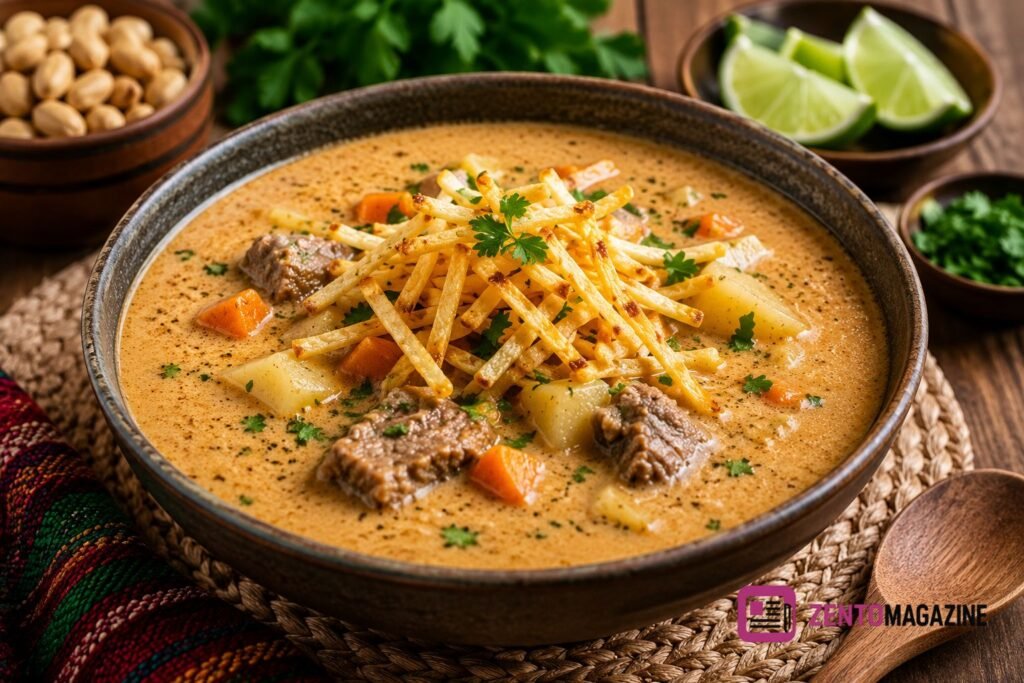
Sopa de maní literally means peanut soup. It is a traditional Bolivian soup in which raw or blanched peanuts are blended or ground and then cooked into the broth.
Unlike many peanut stews from other parts of the world, Bolivian sopa de maní is generally not built around a strongly tomato-based sauce. Potatoes, rice, pasta, vegetables, beef, chicken, and crispy potato strips may appear depending on the cook and region.
The peanuts give the broth its pale color, creamy texture, and gently nutty taste. However, the final flavor is usually savory rather than sweet. Onions, garlic, cumin, herbs, meat stock, and vegetables help turn the peanut base into a complete meal.
Although some modern recipes use peanut butter for convenience, many traditional preparations begin with raw, skinless peanuts. These are blended with water and cooked slowly until their raw taste disappears and the broth becomes smooth.
A Bolivian Comfort Food
Sopa de maní is closely associated with Bolivian home cooking. It is the type of dish that can be served as a substantial lunch, a warming family meal, or part of a special gathering.
Some culinary accounts connect the soup particularly strongly with Cochabamba, a Bolivian region widely known for its rich food culture. Today, however, different forms of the soup can be found across Bolivia and in Bolivian communities abroad.
Its appeal is easy to understand. The soup combines familiar, affordable ingredients in a way that feels generous and comforting. The broth is creamy, the meat can be tender, and the crispy garnish adds contrast.
For people who grew up eating it, sopa de maní may carry strong memories of family kitchens and traditional lunches. For first-time diners, it offers an approachable introduction to Bolivian cuisine.
What Authentic Sopa de Mani Tastes Like
The flavor of authentic sopa de maní is usually mild, savory, earthy, and slightly nutty. It should not taste like sweetened peanut butter, nor should one ingredient overpower everything else.
The peanut base creates richness, but the stock and seasonings provide depth. Cumin may add warmth, while garlic, onion, parsley, oregano, or other herbs can bring freshness and aroma.
A well-prepared version often develops flavor gradually through slow cooking. As the peanuts cook, their raw edge softens and the soup becomes creamier. Meat, vegetables, and starches release additional flavor into the broth.
The final bowl should taste balanced. You should be able to notice the peanuts without losing the character of the vegetables, herbs, and stock.
Common Ingredients
Traditional recipes are not completely identical, but several ingredients appear repeatedly. Ground raw peanuts are the defining element. Potatoes are also common, both inside the soup and as a crispy garnish.
Beef ribs, bone-in beef, or chicken may provide the main protein. Some restaurants offer vegetarian versions that depend on peanuts, potatoes, vegetables, and vegetable stock for body.
Carrots, onions, garlic, green beans, bell peppers, peas, celery, and herbs may be included. Rice or pasta can make the soup more filling. One documented Cochabamba-style preparation includes beef, raw peanuts, potatoes, rice, carrots, peppers, green beans, garlic, and cumin.
The exact combination is less important than the quality of the preparation. A simple bowl made carefully can taste more authentic than an overloaded version with poorly balanced ingredients.
The Crispy Potato Garnish
One of the most enjoyable features of sopa de maní is the topping of thin, crispy potato strips. These may resemble small homemade French fries placed on the soup shortly before serving.
The garnish adds saltiness, texture, and visual appeal. It also creates a pleasant contrast with the soft vegetables and creamy broth.
Freshly fried potatoes should remain crisp when the bowl reaches the table. If they are left in the soup too long, they absorb liquid and become soft. That does not necessarily ruin the dish, but it changes the experience.
Some restaurants serve the potatoes separately, allowing diners to add them gradually. This is especially useful for takeaway and delivery orders.
Where to Find Authentic Bowls
The most reliable place to begin your search is a dedicated Bolivian restaurant. A kitchen specializing in Bolivian food is more likely to understand the traditional texture, ingredients, and serving style.
Latin American restaurants may also offer sopa de maní, especially in cities with active Bolivian communities. However, it is sensible to check whether the restaurant actually focuses on Bolivian dishes rather than using a broad regional label.
Small family-run restaurants can be excellent choices. Their recipes may be based on household traditions, and the soup may be prepared in limited batches rather than produced as a standardized menu item.
Community markets, cultural festivals, church events, and Bolivian independence celebrations can also be good places to find traditional food. These settings sometimes feature home cooks or local vendors whose dishes are not available in restaurants.
How to Search Locally
When searching online, use the full dish name rather than a general phrase such as “peanut soup.” Search for best sopa de mani near me, “Bolivian peanut soup,” or “Bolivian restaurant near me.”
Including your neighborhood, city, or postal code can make the results more useful. You can also search for the spelling “sopa de maní” with the accent mark, although most search platforms understand both versions.
Look beyond the first few results. A small restaurant may have fewer reviews than a large chain but still serve a more traditional bowl.
Check menu photographs, recent customer images, business hours, and the date of the latest review. Restaurants sometimes rotate soups or serve sopa de maní only on certain days.
Calling ahead is worthwhile. Ask whether it is available that day, whether it contains beef or chicken, and whether a vegetarian option is offered.
How to Read Reviews
Customer reviews can help, but star ratings alone do not tell the complete story. Focus on comments that mention the soup by name.
Useful reviews may describe the broth as creamy, homemade, flavorful, or properly seasoned. They may also mention tender meat, generous portions, fresh potato garnish, and friendly service.
Photographs are especially helpful. Look for a creamy but pourable broth, visible vegetables, a clean presentation, and crisp potatoes added near serving time.
Be cautious when reviews repeatedly mention an oily surface, undercooked peanuts, overly thick broth, bland seasoning, tough meat, or stale garnish.
One negative review should not automatically remove a restaurant from consideration. Instead, look for repeated patterns across several recent reviews.
Signs of a Good Restaurant
A restaurant serving excellent sopa de maní usually demonstrates care in more than one area. The menu should clearly identify the dish and, ideally, describe its main ingredients.
Staff members should be able to explain whether the soup contains peanuts, dairy, meat, gluten, or other ingredients that matter to customers with dietary restrictions.
A good kitchen will also handle garnishes carefully. Crispy potatoes, herbs, or sauce should appear fresh rather than prepared too far in advance.
The restaurant does not need luxurious décor. Many memorable bowls are served in simple neighborhood dining rooms. Cleanliness, ingredient quality, welcoming service, and consistent cooking are more important.
An active connection with Bolivian food culture is another encouraging sign. A menu containing dishes such as salteñas, silpancho, pique macho, anticuchos, or traditional Bolivian drinks may indicate a more focused kitchen.
What Makes a Great Bowl?
The broth is the heart of the dish. It should be smooth and creamy but still feel like soup rather than peanut paste.
A strong version has enough seasoning to bring out the peanuts without making the soup aggressively salty. The flavor should be rounded, with gentle warmth from spices and freshness from herbs.
The meat should be tender enough to eat comfortably with a spoon or fork. Bone-in meat can add depth to the stock, while boneless beef or chicken may be easier for diners.
Vegetables should be soft but recognizable. Rice or pasta should not be overcooked, and the crispy potatoes should provide a clear textural contrast.
Most importantly, the components should taste connected. The best sopa de maní is not simply a collection of ingredients floating in peanut broth. It tastes like everything has cooked together with purpose.
Regional and Family Variations
There is no single version served by every Bolivian household. One family may use beef ribs, while another prefers chicken. Some cooks add rice, others add pasta, and some use both potatoes and another starch.
Vegetable choices also change according to season, location, and family habit. Peas, carrots, green beans, celery, peppers, and onions are all possible.
The consistency may range from relatively light to deeply creamy. Garnishes can include fried potato strips, parsley, cilantro, hot pepper sauce, or fresh herbs.
These variations do not automatically make one bowl more authentic than another. Traditional food often develops through family practice rather than a single fixed formula.
When comparing restaurants, judge whether the dish feels thoughtfully prepared and culturally grounded instead of expecting every bowl to look exactly the same.
Meat and Vegetarian Options
Beef is one of the most familiar proteins used in sopa de maní. Bone-in cuts can produce a rich stock, while stewing beef creates hearty pieces throughout the bowl.
Chicken versions are usually lighter but can still be satisfying. The gentler chicken stock allows the peanut flavor to remain prominent.
Vegetarian sopa de maní is also possible. Peanuts and potatoes naturally provide body, while vegetable stock, onions, garlic, carrots, peas, and herbs create depth. Vegetarian adaptations are documented alongside meat-based versions.
Before ordering, confirm what the broth contains. A soup without visible meat may still have been prepared with beef or chicken stock.
Vegan diners should also ask whether the potatoes or vegetables were cooked with butter, animal fat, or meat-based seasoning.
Delivery and Takeaway
Sopa de maní can travel reasonably well, but packaging affects the final quality. The soup should be placed in a tightly sealed, heat-safe container.
Crispy potatoes should be packed separately. Adding them before transport almost guarantees that they will become soft.
Fresh herbs, hot sauce, or other garnishes are also better in separate containers. This gives you more control over the final flavor.
When the order arrives, reheat the soup gently if necessary. Stir frequently because the peanut-rich broth may thicken as it cools.
If it becomes too thick, a small amount of water or unsalted stock can loosen it. Add liquid gradually so the flavor does not become diluted.
Portion Size and Value
Sopa de maní is generally more filling than a light vegetable soup. Peanuts, potatoes, rice, pasta, vegetables, and meat can make one bowl feel like a full meal.
Do not judge value only by container size. A moderately sized portion made with quality meat and a rich peanut broth may be more satisfying than a larger but watery serving.
Consider what is included. Bread, rice, salad, hot sauce, or a drink may be part of a lunch special.
Family restaurants sometimes offer a daily menu in which soup is served before a main course. In that context, the portion may be smaller because it is intended as one part of a larger meal.
Nutrition and Fullness
Peanuts contribute protein, unsaturated fats, fiber, niacin, magnesium, and other nutrients. They are technically legumes, even though they are commonly grouped with nuts in everyday cooking.
Their combination of fat, protein, and fiber can make peanut-based foods satisfying. However, the nutritional profile of sopa de maní depends on the complete recipe.
A bowl containing fatty beef, fried potatoes, generous oil, and a large amount of salt will differ from a vegetable-heavy version made with lean chicken.
Sopa de maní can be part of a balanced meal, but it should not automatically be described as low-calorie. Peanuts are nutrient-dense and energy-dense, while fried garnishes and meat can increase the total energy content.
People managing sodium intake can ask whether the kitchen can use less salt or serve salty condiments separately.
Peanut Allergy Safety
Anyone with a peanut allergy must avoid sopa de maní. Peanuts are not a minor garnish in this dish; they form the foundation of the broth.
Removing visible toppings does not make the soup safe. The peanuts are usually blended directly into the liquid and cooked throughout the dish.
People with severe allergies should also be cautious in Bolivian restaurants where peanuts may be handled in shared kitchen spaces.
Other dietary concerns matter as well. Depending on the recipe, the soup may contain gluten from pasta or seasonings, and animal products may be present in the stock.
Ask direct questions before ordering. A responsible restaurant should be willing to explain the ingredients, although it may not be able to guarantee an allergen-free environment.
What to Order With It
Sopa de maní is filling enough to stand alone, but several simple pairings work well.
Fresh bread can be used to absorb the creamy broth. A light salad adds freshness and acidity, especially when the soup is rich.
Bolivian hot sauce, often served separately, can provide heat without changing the base flavor for everyone at the table.
A cool fruit drink may balance the warmth and richness of the meal. Water with citrus is another simple choice.
If the soup is served as a starter, choose a smaller main dish. Ordering another heavy plate may be more food than expected.
Mistakes to Avoid
The first mistake is choosing a restaurant solely because it appears at the top of a search page. Visibility does not always equal quality or authenticity.
Another mistake is assuming all peanut soups are the same. West African peanut stews, Southeast Asian peanut dishes, and Bolivian sopa de maní have different culinary traditions and ingredient patterns.
Do not assume the soup is vegetarian just because you cannot see meat. The broth may still contain beef or chicken.
Avoid ordering without checking availability. Traditional soups may be daily specials, weekend dishes, or limited-batch items.
Finally, do not dismiss a restaurant because its version differs from a photograph you saw online. Family and regional variation is part of the dish’s identity.
Questions to Ask Before Visiting
A few simple questions can help you avoid disappointment.
Ask whether sopa de maní is available that day. Confirm which meat is used and whether the broth is meat-based.
You can also ask whether the soup contains rice, pasta, dairy, or gluten. For takeaway, request that the crispy potatoes be packed separately.
If you prefer spice, find out whether hot sauce is included. Traditional sopa de maní is often gently seasoned rather than extremely hot, so extra heat may be served on the side.
These questions are especially helpful when traveling or ordering from a restaurant for the first time.
How to Enjoy Your First Bowl
Taste the broth before adding hot sauce or extra salt. This lets you understand the restaurant’s intended balance.
Try a spoonful containing broth, vegetables, meat, and crispy potato. The combination shows how the different textures work together.
Add garnish gradually. A small amount of hot sauce can brighten the soup, but too much may cover the subtle peanut flavor.
Eat it while it is warm. As peanut soup cools, the texture may become thicker and the potatoes may soften.
Most of all, approach it as a traditional dish rather than simply another restaurant soup. Its appeal comes from the relationship between familiar ingredients, patient cooking, and Bolivian food culture.
Finding Your Best Local Bowl
The search for the best sopa de mani near me should begin with Bolivian restaurants, family-owned kitchens, local markets, and community recommendations.
Read recent reviews, study customer photographs, check the menu, and call ahead when necessary. Look for a creamy peanut broth, tender meat or well-seasoned vegetables, balanced spices, and freshly prepared potato garnish.
Remember that the best version may not be the most expensive or the most heavily advertised. It may come from a modest neighborhood restaurant where the recipe has been prepared in the same family style for years.
Authenticity does not require every bowl to be identical. Beef, chicken, vegetarian, rice-based, pasta-based, and vegetable-rich versions can all reflect genuine Bolivian cooking traditions.
Conclusion
Sopa de maní is a warm, satisfying expression of Bolivian cuisine. Its creamy peanut broth, vegetables, meat, starches, herbs, and crispy potatoes create a meal that is both comforting and distinctive.
To find an authentic bowl, focus on restaurants that understand the dish rather than businesses that simply list it on a large menu. Examine recent feedback, confirm availability, ask about ingredients, and pay attention to how the soup is presented.
A truly good bowl should have a properly cooked peanut base, balanced seasoning, fresh garnishes, and ingredients that complement one another.
Once you find a restaurant that prepares it with care, your search for the best sopa de mani near me may lead to more than a satisfying lunch. It can also introduce you to the depth, hospitality, and regional variety of Bolivian food culture.
Frequently Asked Questions
1. What is sopa de maní made of?
Sopa de maní is a traditional Bolivian peanut soup made with ground peanuts, beef or chicken, potatoes, vegetables, herbs, and spices. Many recipes are finished with crispy potato strips for extra flavor and texture.
2. Where can I find the best sopa de maní near me?
The best place to start is a Bolivian restaurant or a Latin American restaurant with authentic Bolivian dishes. Reading recent customer reviews and checking the menu beforehand can help you find the most authentic bowl.
3. Is sopa de maní healthy?
Yes, sopa de maní can be a nutritious meal. Peanuts provide protein, healthy fats, and essential nutrients, while the vegetables add fiber and vitamins. The overall nutrition depends on the recipe and portion size.
4. Can I order sopa de maní for delivery?
Many restaurants offer delivery through local food delivery services or direct pickup. For the best experience, ask the restaurant to pack the crispy potato garnish separately so it stays crunchy until you’re ready to eat.
5. What makes an authentic bowl of sopa de maní?
An authentic bowl features a smooth peanut broth, tender meat or well-seasoned vegetables, fresh herbs, perfectly cooked potatoes, and a crispy potato garnish. The flavors should be rich, balanced, and true to traditional Bolivian cooking.
