


Searching for the best locro de zapallo near me is about more than finding a convenient restaurant. It is an opportunity to experience a comforting South American dish built around pumpkin or squash, potatoes, corn, vegetables, herbs, and cheese.
A well-prepared locro de zapallo has a naturally creamy texture without feeling like an ordinary pumpkin soup. It should be thick enough to hold its shape on the plate while remaining soft, warm, and satisfying. The sweetness of the squash is balanced by savory onions, garlic, peppers, herbs, potatoes, and salty cheese.
This guide explains what authentic locro de zapallo tastes like, where you are most likely to find it, how to evaluate nearby restaurants, what to order with it, and how to recognize a version prepared with care.
What Is Locro de Zapallo?
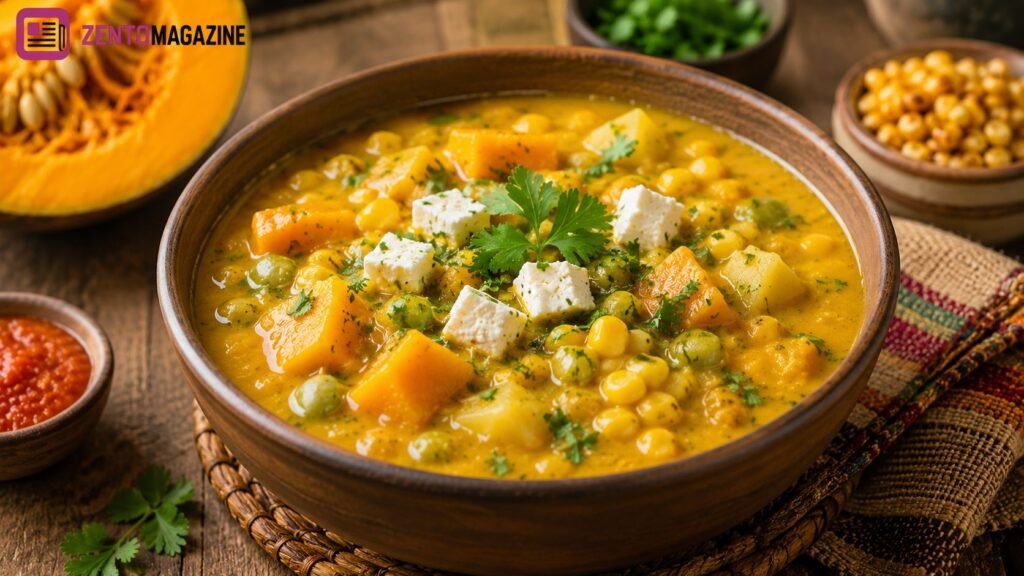
Locro de zapallo is a thick squash-based stew associated with the culinary traditions of the Andes. Versions of locro are prepared in several South American countries, including Peru, Ecuador, Bolivia, Argentina, Colombia, Chile, and Paraguay.
The exact recipe changes by country, region, and household. Some forms of locro include meat, beans, hominy, or sausage. Peruvian locro de zapallo, however, is commonly prepared as a vegetable-forward dish featuring squash, potatoes, corn, peas, fresh cheese, onions, garlic, and yellow chili.
The name “zapallo” generally refers to pumpkin or squash. In Peru, cooks often use zapallo macre, a large orange-fleshed squash valued for its soft texture and mild sweetness. Some recipes combine macre with zapallo loche, an aromatic squash closely associated with northern Peruvian cooking.
As the squash cooks, it softens and partially breaks down. This creates the creamy base that gives the dish its recognizable consistency. Potatoes, corn, beans, peas, milk, cheese, and herbs may then be added to create a complete and filling meal.
The Andean Character of the Dish
Locro reflects the agricultural heritage of the Andes. Squash, potatoes, corn, beans, peppers, and aromatic herbs have long played important roles in regional cooking.
The ingredients are practical as well as flavorful. Potatoes provide body, corn introduces sweetness and texture, beans or peas make the meal more substantial, and squash creates a rich base without requiring a heavy sauce.
Many traditional recipes also include ají amarillo, the yellow pepper widely used in Peruvian cuisine. It brings fruity flavor, warmth, and a golden tone rather than overwhelming heat.
Huacatay, sometimes called Peruvian black mint, may be added for its distinctive herbal aroma. Its flavor is difficult to describe with a single comparison because it can suggest mint, basil, citrus, and tarragon at the same time.
This collection of ingredients helps explain why locro de zapallo feels both humble and complex. It is prepared from familiar vegetables, yet the combination produces a flavor that is unmistakably Andean.
What Authentic Locro Should Taste Like
A good locro de zapallo should taste savory first, with a gentle natural sweetness from the squash and corn. It should not taste like pumpkin pie, sweetened purée, or dessert soup.
Onion, garlic, and chili usually form the flavor base. The squash then contributes softness and sweetness, while potatoes make the stew thicker and more filling.
Fresh cheese provides a salty, creamy contrast. Depending on the recipe, some of the cheese may melt into the stew while additional cubes remain visible. Milk or evaporated milk may also be used, although not every traditional preparation includes dairy beyond the cheese.
The seasoning should support the vegetables rather than hide them. Excessive salt, oil, cream, or spice can disturb the balance that makes the dish appealing.
A properly prepared serving should therefore feel creamy, earthy, lightly sweet, savory, and comforting at the same time.
How the Texture Should Feel
Texture is one of the easiest ways to judge locro de zapallo.
The stew should be thick and creamy, but it does not need to be completely smooth. Small pieces of potato, corn, peas, beans, squash, or cheese often remain visible.
A watery locro may indicate that it was not cooked long enough or that too much stock was added. A completely smooth version can still taste good, but it may resemble puréed squash soup more than a traditional rustic locro.
The best versions sit between those two extremes. The squash should be soft enough to create a sauce, while the remaining vegetables provide enough texture to make each spoonful interesting.
When ordering the dish for delivery, remember that it may continue thickening as it cools. Gentle reheating and a small splash of water, milk, or stock can help restore its original consistency.
How to Find the Best Locro de Zapallo Near Me
The most effective search begins with the type of restaurant rather than the dish alone.
Try searching for Peruvian restaurants, Andean restaurants, Ecuadorian restaurants, South American cafés, Latin American lunch counters, or family-owned regional kitchens. Locro may appear on menus under slightly different names, including pumpkin locro, squash stew, Peruvian pumpkin stew, locro de zapallo, or simply locro.
Google Maps and other map services are helpful, but menu information is not always complete. Small restaurants often change daily dishes without updating their online listings.
Search recent customer photographs as well as written reviews. Photos can reveal the color, thickness, portion size, rice accompaniment, cheese, and presentation more clearly than a short menu description.
It is also worth calling the restaurant directly. Ask whether locro de zapallo is available every day, only during lunch, or as a rotating special. This simple step can prevent a wasted trip.
Look Beyond the First Search Results
The highest-ranked restaurant is not automatically the most authentic choice.
Search rankings are influenced by location, advertising, popularity, and the strength of a restaurant’s online presence. A small family-run kitchen may serve excellent locro without appearing at the top of the results.
Explore restaurants a little farther from the city center, particularly in neighborhoods with established Peruvian, Ecuadorian, Bolivian, or broader Latin American communities.
Local food groups can also be useful. Community forums, neighborhood pages, cultural associations, and regional food discussions often mention dishes that are difficult to locate through standard searches.
Farmers’ markets, cultural festivals, food halls, and South American grocery stores with prepared-food counters may also offer locro on selected days.
Read Restaurant Reviews Carefully
Reviews are most useful when they mention specific details.
A general statement such as “the food was great” tells you very little about locro de zapallo. Look for comments about homemade flavor, freshness, seasoning, vegetable texture, authenticity, serving temperature, portion size, and consistency.
Recent reviews matter more than older ones because restaurant staff, menus, recipes, and ingredient quality can change.
Customer photographs are especially valuable. Look for a warm yellow-orange stew with visible vegetables, corn, cheese, or herbs. A serving of white rice on the side is common in Peruvian presentations.
Do not reject a restaurant because of one negative comment. Instead, look for repeated patterns. Several complaints about watery food, cold delivery, or inconsistent seasoning deserve more attention than a single isolated review.
Check the Menu Before Visiting
Restaurant menus can help you determine whether locro is treated as a genuine regional dish or merely a seasonal pumpkin item.
An authentic Peruvian menu may list it alongside dishes such as ají de gallina, lomo saltado, causa, seco, tallarines, arroz con pollo, or papa a la huancaína.
The description may mention zapallo macre, ají amarillo, choclo, potatoes, peas, beans, cheese, milk, huacatay, rice, or a fried egg.
Some restaurants prepare vegetarian locro but serve it beside grilled steak, roast chicken, fish, or another protein. Others cook meat directly into the stew. Ask for details when dietary preferences matter.
A carefully written menu description is encouraging, but the final judgment should still be based on flavor, freshness, and preparation.
Signs of a Well-Made Locro
A great bowl or plate of locro usually has several noticeable qualities.
The first is a fresh squash flavor. It should taste naturally sweet and earthy rather than artificial, canned, or overly sugary.
The second is balance. Garlic, onion, chili, cheese, herbs, salt, and vegetables should work together without one ingredient dominating the dish.
The third is controlled thickness. The stew should not separate into watery liquid and solid vegetables.
The fourth is ingredient definition. Even though the squash becomes creamy, the corn, potatoes, peas, beans, or cheese should still contribute recognizable textures.
Finally, the dish should arrive hot. Locro loses much of its charm when served lukewarm because the cheese becomes firm and the stew feels heavier.
Traditional Ingredients to Expect
There is no single recipe followed by every cook, but several ingredients appear repeatedly.
Squash is the foundation. Zapallo macre is traditional in many Peruvian recipes, while butternut squash or other orange-fleshed varieties are practical substitutes outside South America.
Potatoes add starch and substance. Corn introduces sweetness and a gentle bite. Green peas or broad beans may provide color, texture, and additional plant-based protein.
Onion and garlic form the savory base. Ají amarillo adds a mild fruity heat and deeper color.
Fresh cheese is often added near the end so that it softens without disappearing completely. Milk may be included to round out the texture.
Huacatay, cilantro, mint, or parsley may provide a fresh finishing note. The herbs vary according to household preference and ingredient availability.
Regional Differences Matter
The word “locro” does not describe exactly the same dish everywhere.
In Argentina, locro is commonly understood as a substantial stew made with corn, beans, squash, and meat. It is often associated with national celebrations and cool-weather gatherings.
Ecuadorian locro de papa is centered on potatoes and frequently served with cheese and avocado. Other Ecuadorian locros can include different meats, vegetables, or regional ingredients.
Peruvian locro de zapallo is distinguished by its squash-heavy base, yellow color, potatoes, corn, vegetables, cheese, and frequent use of ají amarillo.
Because of these differences, a restaurant may serve an excellent locro that is not the pumpkin-centered version you expected. Read the description or speak with the staff before ordering.
What to Order with Locro de Zapallo
White rice is one of the most common accompaniments. Its mild flavor balances the rich stew and absorbs the sauce.
A fried egg is another popular addition. The soft yolk can blend into the squash and make the meal even richer.
Grilled steak, chicken, or fish may be served on the side for diners who prefer additional protein. The locro itself, however, can be satisfying without meat when it includes potatoes, corn, beans, peas, and cheese.
Fresh bread works well for scooping up the thick sauce. Avocado provides a cool, creamy contrast, while a simple salad can lighten the meal.
For drinks, consider chicha morada, fresh fruit juice, sparkling water, or a light herbal beverage. A mild drink allows the flavor of the ají amarillo and herbs to remain noticeable.
Is Locro de Zapallo Vegetarian?
Many Peruvian versions are vegetarian, but this should never be assumed automatically.
The visible ingredients may be vegetables and cheese, while the cooking liquid could still contain chicken or beef stock. Some kitchens may also prepare the base with lard or serve meat mixed into the stew.
Ask whether the dish contains meat stock, animal fat, or meat pieces. Strict vegetarians should also confirm whether the cheese uses animal-derived rennet if that is personally important.
A vegan version is possible, but traditional recipes frequently contain fresh cheese, milk, or both. Restaurants offering vegan locro may replace dairy with plant-based milk, blended beans, cashew cream, tofu, or vegan cheese.
Is It Gluten-Free?
The basic ingredients in locro de zapallo—squash, potatoes, corn, peas, beans, cheese, milk, onions, garlic, and peppers—are naturally free from gluten.
However, restaurant preparation creates possible risks. Stock powders, seasoning blends, sauces, flour-based thickeners, and cross-contact in shared kitchens may introduce gluten.
People with celiac disease or serious gluten sensitivity should ask the restaurant directly about ingredients and kitchen practices.
Do not rely only on the appearance of the dish. A traditional recipe may be gluten-free, while a restaurant’s adaptation may not be.
Nutrition and Comfort
Locro de zapallo can be a nourishing meal because it combines several vegetables in one dish.
Pumpkin and orange-fleshed squash contain carotenoid pigments, including beta-carotene, which the body can convert into vitamin A. USDA resources also identify pumpkin as a source of vitamin A and dietary fiber.
Potatoes and corn contribute carbohydrates, making the meal satisfying and energy-dense enough for lunch or dinner. Peas and beans can add fiber and plant protein, while cheese and milk contribute protein, calcium, fat, and richness.
Its nutritional profile depends heavily on the recipe. A vegetable-heavy preparation with moderate cheese and oil will differ from one containing large amounts of cream, butter, salt, or fatty meat.
It is better to view locro as a balanced comfort dish than to make exaggerated health claims about it.
Why The Pizza Edition 3x Is a Game Changer for Home Cooks
Ordering Locro for Delivery
Locro usually travels better than delicate fried dishes, but packaging still matters.
The container should close securely because the stew is thick but capable of leaking. Rice should ideally be packed separately so that it does not absorb too much moisture during transportation.
Fried eggs, bread, avocado, and meat accompaniments should also be separated whenever possible.
Choose restaurants located within a reasonable delivery distance. Long travel times can cause the stew to cool, the cheese to harden, and the vegetables to become overly soft.
Once delivered, stir the locro gently before eating. If reheating is necessary, use low heat and stir frequently to prevent the squash and dairy from sticking to the pan.
How Much Should It Cost?
The price of locro de zapallo varies according to location, restaurant style, serving size, ingredients, and whether meat is included.
A casual lunch counter may sell it as an affordable daily special. A full-service restaurant may charge more because of table service, presentation, larger portions, imported ingredients, or additional accompaniments.
Delivery orders may include service fees, packaging costs, and higher menu prices. Compare the complete cost rather than looking only at the listed price of the dish.
Value should not be judged by price alone. A slightly more expensive serving made with fresh squash, good cheese, proper seasoning, and a generous portion may provide better value than a cheaper but watery version.
Common Search Mistakes
One common mistake is searching only for the exact English phrase. Restaurants may describe the dish in Spanish or list it under a broader lunch menu.
Another mistake is relying on old photos. Menus change, and a dish shown two years ago may no longer be available.
Choosing only by star rating can also be misleading. A highly rated restaurant may be known for seafood or grilled meat rather than traditional stews.
Some diners order without checking the regional style. They expect Peruvian squash locro but receive Argentine corn-and-meat locro or Ecuadorian potato locro.
Finally, many people fail to call ahead. Since locro is frequently offered as a rotating homemade special, confirming availability is one of the most effective search steps.
Questions to Ask the Restaurant
A brief conversation with the staff can reveal a great deal.
Ask what type of squash is used and whether the dish contains ají amarillo, corn, potatoes, peas, beans, milk, or cheese.
Confirm whether it is vegetarian and whether the cooking stock contains meat.
Ask whether rice, egg, bread, avocado, or another side is included. This helps you understand both the portion and the value.
You can also ask whether the locro is prepared fresh each day. Stews often taste even better after the flavors have rested, but they should still be stored, reheated, and served properly.
Staff members who can explain the dish clearly are often working in a kitchen that understands its cultural importance.
Enjoying Your First Serving
Begin by tasting the locro before adding salt or hot sauce. This allows you to appreciate the balance created by the cook.
Try a spoonful containing squash, potato, corn, and cheese together. Then taste it with rice or another accompaniment.
If ají sauce is provided, add it gradually. A small amount can highlight the sweetness of the squash, but too much may cover the herbs and cheese.
Pay attention to the finish. A carefully prepared locro leaves a gentle savory, sweet, and herbal flavor rather than an oily or heavily salted aftertaste.
The dish is best enjoyed slowly while it is still warm.
Final Thoughts
Finding the best locro de zapallo near me requires a little more effort than choosing the first nearby restaurant. Search for Peruvian and Andean kitchens, study recent menu photographs, read detailed reviews, and confirm availability before visiting.
The best locro should have a rich squash flavor, balanced seasoning, a thick but rustic texture, fresh vegetables, and a pleasant contrast from corn, herbs, chili, and cheese.
Remember that regional versions can differ considerably. Ask whether the restaurant serves Peruvian pumpkin locro, Ecuadorian potato locro, Argentine locro, or another local interpretation.
A truly memorable serving does not need elaborate presentation. It needs fresh ingredients, patient cooking, proper seasoning, and the unmistakable warmth of a dish rooted in home-style South American food traditions.
Frequently Asked Questions
1. What is locro de zapallo made of?
Locro de zapallo is a traditional South American squash stew made with pumpkin or squash, potatoes, corn, onions, garlic, fresh cheese, herbs, and seasonings. Some regional recipes also include peas, beans, milk, or meat.
2. Where can I find the best locro de zapallo near me?
The best places to enjoy locro de zapallo are authentic Peruvian or South American restaurants, family-owned eateries, and local Latin American cafés. Reading recent customer reviews and checking updated menus can help you choose a quality restaurant.
3. Is locro de zapallo a vegetarian dish?
Many versions of locro de zapallo are vegetarian because they are prepared with vegetables, cheese, and herbs. However, some restaurants use meat stock or add beef or chicken, so it’s always worth asking before ordering.
4. Can I order locro de zapallo for delivery?
Yes. Many restaurants offer locro de zapallo through takeout and food delivery services. Since it travels well, it’s a great comfort meal to enjoy at home while still tasting fresh and satisfying.
5. What should I serve with locro de zapallo?
Locro de zapallo is commonly served with white rice, crusty bread, avocado, or a fried egg. These sides complement the rich, creamy texture of the stew and create a complete, filling meal.
