

Introduction
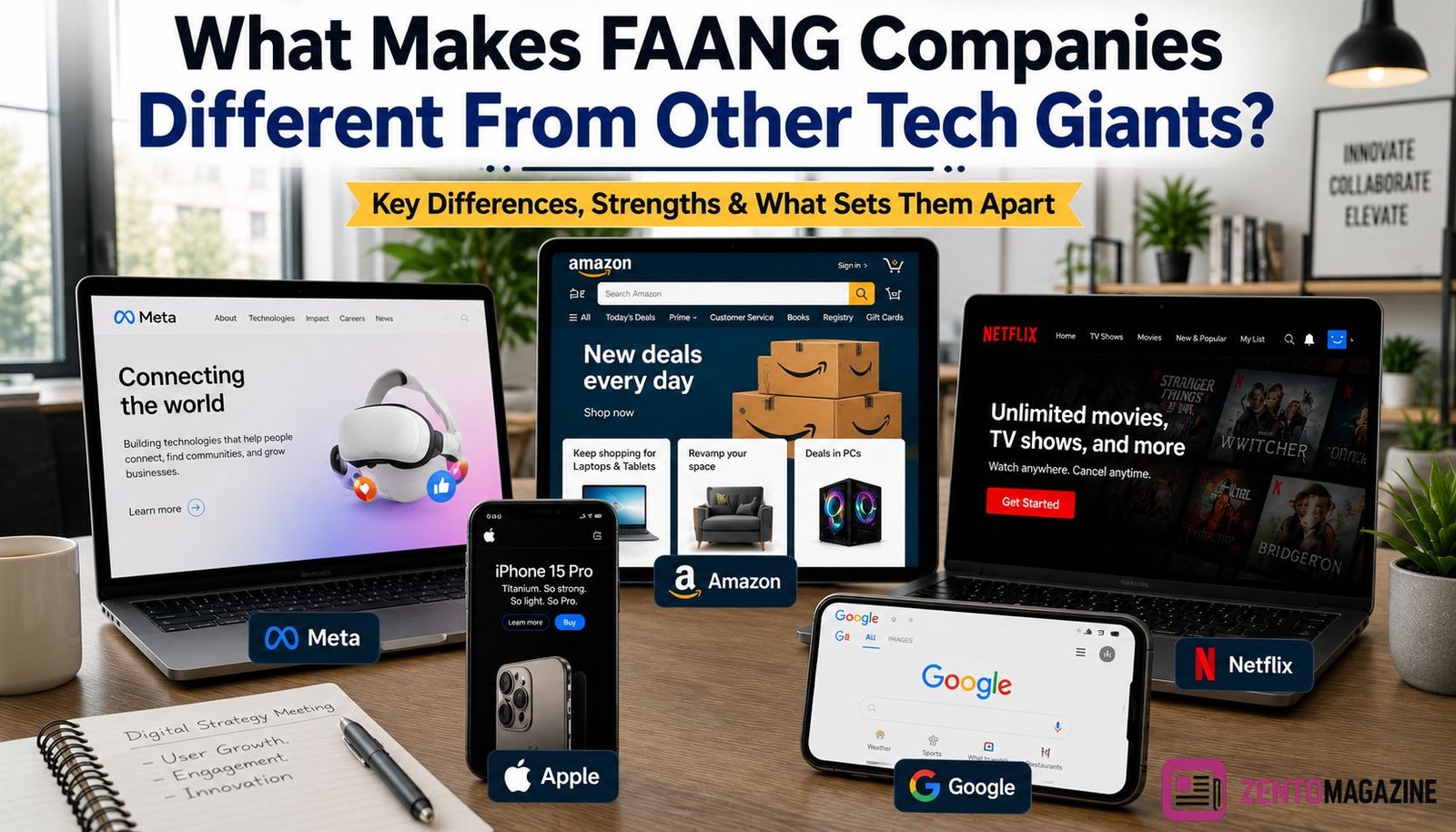
FAANG is one of the most recognized terms in the modern technology world. It stands for Facebook, now Meta, Amazon, Apple, Netflix, and Google, now Alphabet. These companies became famous not only because they are large, but because they changed how people communicate, shop, search, watch entertainment, use devices, and interact with digital services every day.
While many companies are called tech giants, FAANG has always carried a special meaning. It represents a group of businesses that grew at remarkable speed, shaped global consumer behavior, attracted top talent, influenced stock markets, and forced competitors to rethink their strategies.
The main reason FAANG companies stand apart is simple: they are not just technology companies. They are platforms, ecosystems, cultural forces, and market movers. Their products are deeply connected to daily life, and their decisions can affect industries far beyond technology.
| Label | Information |
|---|---|
| Name | FAANG |
| Type | Technology Company Group |
| Full Form | Facebook, Amazon, Apple, Netflix, Google |
| Current Names | Meta and Alphabet included |
| Industry | Technology |
| Purpose | Represents leading tech companies |
| Origin | Popularized by investors and analysts |
| Global Reach | Billions of users worldwide |
| Key Strength | Innovation and market influence |
| Main Revenue Sources | Advertising, cloud, hardware, subscriptions |
| Career Appeal | High salaries and growth opportunities |
| Market Impact | Strong influence on stock markets |
| Future Focus | Artificial intelligence and emerging technologies |
What FAANG Means
The term FAANG originally became popular among investors and tech analysts to describe a group of high-growth technology stocks. The companies included were Facebook, Amazon, Apple, Netflix, and Google. Over time, Facebook changed its corporate name to Meta, and Google became part of Alphabet, but the acronym stayed widely used.
Each company earned its place in the group for a different reason. Meta built some of the world’s largest social platforms. Amazon transformed online shopping and cloud computing. Apple created a tightly connected hardware and software ecosystem. Netflix changed the entertainment industry through streaming. Alphabet made Google Search, YouTube, Android, and digital advertising central to the internet economy.
Together, these companies became symbols of digital power. They were not grouped together because they all did the same thing. They were grouped together because each one dominated a major part of modern technology.
Scale That Few Can Match
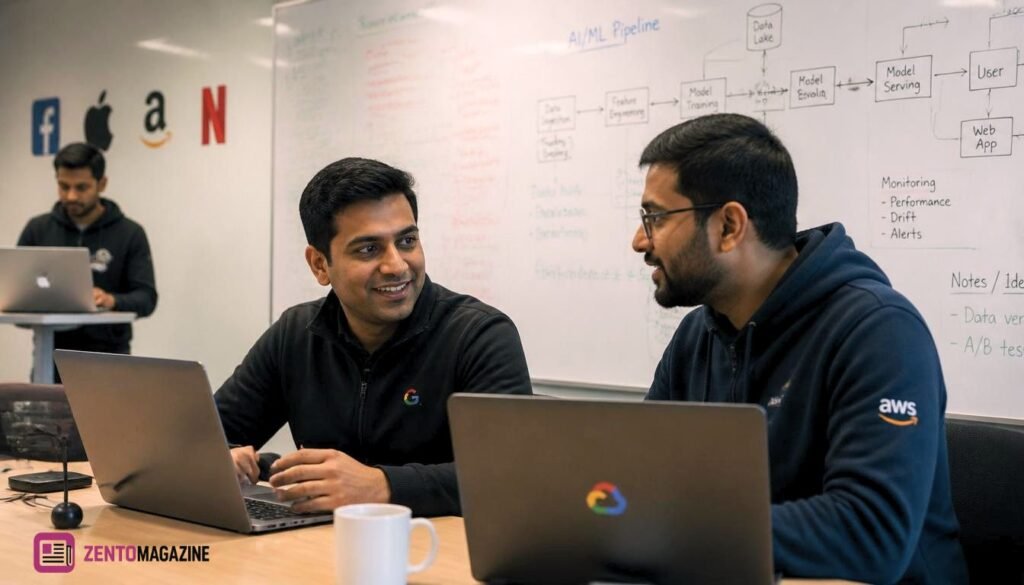
One of the clearest differences between FAANG and other tech giants is scale. These companies serve hundreds of millions, and in some cases billions, of users around the world. Their platforms operate across countries, languages, devices, and industries.
Meta connects people through Facebook, Instagram, WhatsApp, Messenger, and related services. Amazon reaches consumers through e-commerce, Prime, logistics, advertising, and Amazon Web Services. Apple sells devices used by people, businesses, schools, and creators. Netflix reaches global audiences through streaming entertainment. Alphabet touches daily internet use through Search, YouTube, Android, Maps, Gmail, and cloud services.
Many tech companies are powerful in one area, but FAANG companies often operate at global scale across several layers of digital life. Their reach gives them an advantage in data, distribution, brand trust, and product adoption.
Strong Digital Ecosystems
A major reason FAANG companies are different is their ability to build ecosystems. An ecosystem means customers do not use just one product. They enter a connected network of services, devices, subscriptions, apps, and platforms.
Apple is the clearest example. A user may start with an iPhone, then use iCloud, Apple Music, Apple Pay, the App Store, Apple Watch, Mac, AirPods, and Apple TV. The value grows as more Apple products work together.
Amazon has a different kind of ecosystem. It connects shopping, Prime delivery, video streaming, Kindle, Alexa, advertising, third-party sellers, and AWS. Customers may use Amazon for convenience, while businesses may use it for selling, logistics, or cloud infrastructure.
Alphabet’s ecosystem is built around internet behavior. Search, YouTube, Android, Chrome, Gmail, Maps, and advertising tools are deeply linked. Meta’s ecosystem is based on social connection, creator content, messaging, and advertising. Netflix focuses more narrowly on entertainment, but its recommendation system, original content strategy, and global streaming model created a powerful media ecosystem.
This ecosystem strength makes FAANG companies hard to replace. A competitor may copy one product, but copying the full system is much harder.
Business Model Power
Another important difference is the strength of their business models. FAANG companies do not rely only on one simple revenue stream. Even when one area slows down, another part of the business can support growth.
Meta earns most of its money from advertising across its family of apps. Its value comes from user attention, targeting tools, and the large number of businesses that advertise on its platforms.
Amazon has several revenue engines. It earns from online retail, marketplace seller fees, Prime subscriptions, advertising, physical stores, and AWS. AWS is especially important because cloud computing has become a major profit driver.
Apple earns from hardware, especially the iPhone, but its services business has become increasingly important. The App Store, subscriptions, iCloud, AppleCare, payments, and digital services help Apple build recurring revenue.
Netflix earns mostly from subscriptions and has expanded into advertising-supported plans. Its model depends on content quality, pricing power, engagement, and global reach.
Alphabet earns heavily from advertising through Google Search and YouTube, while also growing cloud, subscriptions, hardware, and AI-related products.
This mix of revenue sources helps FAANG companies stay resilient. They are not immune to risk, but they have more options than many smaller or narrowly focused tech firms.
Consumer Trust and Daily Use
Many tech giants sell to businesses, but FAANG companies are deeply tied to consumers. Their products are not hidden behind corporate systems. People use them every day, often without thinking about it.
Someone may wake up and check Instagram, search on Google, watch YouTube, order something from Amazon, message through WhatsApp, use an iPhone, and relax with Netflix at night. This daily presence gives FAANG companies strong brand awareness and emotional connection.
That consumer reach matters. It allows them to launch new features quickly, test ideas at scale, and influence habits. A design change in an Apple product, a Google algorithm update, a Netflix pricing decision, or an Amazon delivery improvement can affect millions of people almost immediately.
Other tech giants may be financially strong, but not all of them have this level of direct consumer influence.
Data and Personalization
Data is another major factor that separates FAANG from many other companies. These businesses have built systems that learn from user behavior and improve services over time.
Netflix uses viewing patterns to recommend shows and decide what kind of content may perform well. Amazon uses shopping behavior to improve product suggestions, pricing, logistics, and advertising. Google uses search behavior and web signals to improve search results and ad relevance. Meta uses social activity and engagement patterns to support content ranking and advertising tools. Apple takes a more privacy-focused approach, but still benefits from device usage, ecosystem design, and service integration.
The difference is not only that FAANG companies have data. Many companies have data. The difference is that FAANG firms have the scale, engineering talent, infrastructure, and product systems to turn data into better experiences and stronger business results.
Talent and Hiring Prestige
For many professionals, working at a FAANG company has long been seen as a major career achievement. These companies are known for competitive hiring, strong compensation, complex engineering challenges, and global product impact.
A software engineer at a smaller company may work on an important product, but a software engineer at a FAANG company may work on systems used by millions or billions of people. That scale creates a different level of responsibility and learning.
FAANG experience can also strengthen a résumé. It often signals that a candidate has worked in a demanding environment with high standards for product quality, system performance, collaboration, and problem-solving.
At the same time, FAANG work can be intense. Employees may face pressure, fast-changing priorities, and high expectations. Still, the career value remains one reason these companies continue to attract top talent from around the world.
Innovation at Massive Scale
Many companies innovate, but FAANG companies often innovate at a scale that changes entire industries. Their ideas do not stay small for long. When they move into a market, competitors pay attention.
Amazon changed expectations around delivery speed, online shopping convenience, cloud computing, and marketplace selling. Apple reshaped smartphones, tablets, app distribution, wearables, and digital services. Netflix pushed the entertainment industry away from traditional TV schedules toward on-demand streaming. Google changed how people access information, advertise online, use maps, and consume video. Meta changed social networking, digital identity, creator content, and online advertising.
Their innovation is not always perfect. Some projects fail, and some decisions face criticism. But the scale of their experiments gives them an advantage. They can test, learn, adjust, and invest in ways many companies cannot.
Market Influence
FAANG companies also stand apart because of their influence on financial markets. For years, these companies were among the most watched stocks in the world. Their earnings reports, growth forecasts, and strategic decisions often affected broader investor sentiment toward technology.
Even as newer terms like the “Magnificent Seven” gained attention, FAANG remained important because it showed how a small group of companies could shape market direction. When companies of this size perform well, they can lift major indexes. When they struggle, they can increase market uncertainty.
This level of influence is not typical. Many technology companies are successful, but few have enough weight to affect investor behavior across the wider market.
Competition and Advantage
FAANG companies compete with other major tech firms, including Microsoft, Nvidia, Tesla, Oracle, Adobe, Salesforce, Samsung, and many others. What makes FAANG different is not simply that they are bigger than everyone else. In some areas, other companies may be larger, faster-growing, or more important.
The difference is that FAANG companies built consumer platforms with strong network effects and global habits. A network effect happens when a product becomes more valuable as more people use it. Social platforms, marketplaces, search engines, app stores, and streaming libraries all benefit from this effect.
For example, Amazon becomes more useful when more sellers join the marketplace. YouTube becomes more valuable when more creators upload videos and more viewers watch them. Meta’s apps gain value because people’s friends, families, brands, and communities are already there. Apple’s ecosystem becomes stronger as more users buy devices and developers build apps.
This creates a deep advantage. Competitors can enter the market, but they often struggle to pull users away from platforms that are already part of daily life.
Regulation and Public Scrutiny
With great influence comes serious scrutiny. FAANG companies face pressure from governments, regulators, competitors, privacy advocates, workers, and users. Concerns often focus on market power, data privacy, content moderation, app store rules, advertising practices, labor conditions, and competition.
This is another way FAANG differs from many tech firms. Their scale makes them public-interest companies, not just private businesses. People expect them to answer questions about fairness, safety, transparency, and social impact.
Regulatory pressure can affect how these companies grow. It may lead to fines, lawsuits, product changes, or new rules. Still, scrutiny also shows how central these companies have become. They are large enough that governments and societies cannot ignore them.
Why Netflix Is Different Inside FAANG
Netflix is often the most debated member of FAANG because it is smaller and more focused than the others. It does not have a massive cloud platform like Amazon, a device ecosystem like Apple, or a search and advertising empire like Alphabet.
However, Netflix earned its place because it transformed entertainment. It moved streaming from a side option into the center of global media consumption. It changed how shows are released, how audiences discover content, and how traditional studios think about distribution.
Netflix also proved that a technology-driven company could become a global entertainment leader. Its recommendation system, original programming strategy, and subscription model helped define the streaming era.
So, while Netflix differs from the other FAANG companies, it still represents the same larger theme: using technology, scale, and consumer behavior to reshape an industry.
FAANG vs Other Tech Giants
Other tech giants are extremely important, but they often differ from FAANG in focus. Microsoft is a leader in enterprise software, cloud, productivity tools, gaming, and AI. Nvidia is central to AI chips and accelerated computing. Tesla is focused on electric vehicles, energy, robotics, and software-driven transport. Samsung is a global leader in electronics and semiconductors.
These companies are powerful, but FAANG became famous because of its connection to consumer internet habits, platform dominance, and stock market growth during the digital economy boom.
The difference is partly historical. FAANG captured the story of the internet age: social media, e-commerce, smartphones, streaming, and search. Other tech giants may define the next era, especially in AI, cloud infrastructure, chips, and automation.
The AI Shift
Artificial intelligence is changing the meaning of tech leadership. Alphabet, Amazon, Meta, and Apple are all investing heavily in AI. Netflix also uses AI and machine learning for recommendations, content discovery, production tools, and user experience.
However, the rise of AI has also brought new competitors into the spotlight. Nvidia, Microsoft, OpenAI, Anthropic, and other AI-focused companies now shape many conversations about the future of technology.
This does not make FAANG irrelevant. Instead, it shows that the technology world keeps evolving. FAANG companies remain powerful because they already have users, infrastructure, data, capital, and distribution. But they must keep adapting to stay ahead.
The Human Impact
The real reason FAANG matters is not only financial. These companies changed human behavior. They changed how people communicate, work, shop, learn, travel, watch films, build businesses, and discover information.
Small businesses depend on Amazon marketplaces, Google search visibility, Meta advertising, Apple apps, and online content platforms. Creators use YouTube, Instagram, app stores, and streaming services to reach audiences. Consumers rely on these tools because they are convenient, familiar, and widely available.
This human impact is what separates FAANG from ordinary corporate success. Their technology became part of culture.
Final Thoughts
FAANG companies are different from other tech giants because they combine scale, influence, brand power, daily consumer use, strong ecosystems, data advantages, and market-moving strength. They are not just successful businesses. They are companies that helped define the digital age.
Each FAANG company built a different kind of power. Meta owns social attention. Amazon owns convenience and cloud strength. Apple owns premium devices and ecosystem loyalty. Netflix owns streaming culture. Alphabet owns search, video, maps, mobile software, and digital advertising reach.
Other tech giants are also shaping the future, especially in AI, chips, cloud computing, enterprise software, and electric vehicles. But FAANG remains a powerful concept because it represents the companies that turned technology into everyday life.
For readers, investors, job seekers, and business owners, understanding FAANG is useful because it explains how modern technology power works. These companies show that the strongest tech businesses are not just built on code. They are built on habits, trust, ecosystems, innovation, and the ability to serve the world at scale.
FAQs
What does FAANG stand for?
FAANG stands for Facebook (now Meta), Amazon, Apple, Netflix, and Google (now Alphabet). These companies are known for their strong market influence, innovation, and global reach.
Why are FAANG companies considered different from other tech firms?
FAANG companies combine massive user bases, powerful ecosystems, strong revenue streams, and global brand recognition. Their products are deeply integrated into everyday life for millions of people.
Is Microsoft a FAANG company?
No, Microsoft is not part of the original FAANG group. However, it is often mentioned alongside FAANG companies because of its size, innovation, and influence in cloud computing, software, and artificial intelligence.
Why do professionals want to work at FAANG companies?
Many professionals are attracted to FAANG companies because of competitive salaries, career growth opportunities, challenging projects, and the chance to work on products used worldwide.
Will FAANG companies remain important in the future?
Yes, FAANG companies are expected to remain influential due to their investments in artificial intelligence, cloud services, digital platforms, and emerging technologies. However, they will continue facing competition from newer technology leaders.
