

Introduction
Kibbe body types are one of the most talked-about style systems in modern fashion. Instead of focusing only on body measurements, this method looks at your full appearance, including bone structure, natural lines, softness, sharpness, balance, and overall visual impression. The goal is not to hide your body or force it into trends. The real purpose is to help you dress in a way that feels natural, flattering, and true to you.
Many people struggle with fashion because they follow outfits that look beautiful on someone else but feel wrong on their own body. The Kibbe system helps explain why this happens. A dress, jacket, or hairstyle may look perfect on one person because it matches their natural lines, while the same item may feel heavy, plain, sharp, or unbalanced on someone else.
Understanding your Kibbe type can make shopping easier, improve your wardrobe, and help you build a personal style that feels more confident. It is not about perfection. It is about harmony.
What Are Kibbe Body Types?

Kibbe body types are style identities created by image consultant David Kibbe. His system became known through his book Metamorphosis, published in 1987. The method is built around the idea of yin and yang, which represent two different visual energies.
In simple words, yin means softness, roundness, delicacy, and curve. Yang means sharpness, length, structure, and angularity. Every person has a unique mix of these qualities. Some people appear long and sharp, some look soft and rounded, some look balanced, and others have a lively mix of contrast.
Unlike traditional body shape systems such as apple, pear, hourglass, or rectangle, Kibbe does not only measure the waist, hips, and bust. It considers the whole body. Your shoulders, height, limbs, facial features, curves, and overall impression all matter.
This is why two people with the same clothing size can have completely different Kibbe body types. One may look best in sleek, sharp tailoring, while the other may shine in soft draping or relaxed shapes.
Why the Kibbe System Matters
Fashion advice often tells people to “dress for your shape,” but that advice can feel too limited. It usually focuses on making the body look closer to one ideal form. The Kibbe system takes a different approach. It says your natural features already have beauty, and your clothing should support them.
When your outfit matches your natural lines, you often look more polished without trying too hard. A blazer may suddenly feel powerful instead of stiff. A flowing dress may look elegant instead of shapeless. A cropped jacket may feel playful instead of awkward.
The system is also helpful because it encourages self-acceptance. It does not say one type is better than another. Every type has its own strength, beauty, and style direction. The goal is not to change your body. The goal is to understand it better.
Yin and Yang in Style
The idea of yin and yang is the heart of Kibbe body types. In fashion, yang usually appears as long lines, straight shapes, sharp shoulders, narrow structure, and bold tailoring. Yin appears as curves, softness, rounded edges, delicate details, and flowing shapes.
A person with strong yang may look elegant in clean lines, long coats, sharp suits, and minimal details. A person with strong yin may look beautiful in soft fabrics, rounded shapes, delicate details, and waist emphasis.
Some people are balanced between yin and yang. They may look best in clean, symmetrical, and moderate clothing. Others have a mix of sharp and soft features, which creates contrast. Their best style may include playful shapes, broken lines, or bold details.
Understanding this balance helps you choose clothes that feel connected to your body instead of fighting against it.
The Five Main Kibbe Families
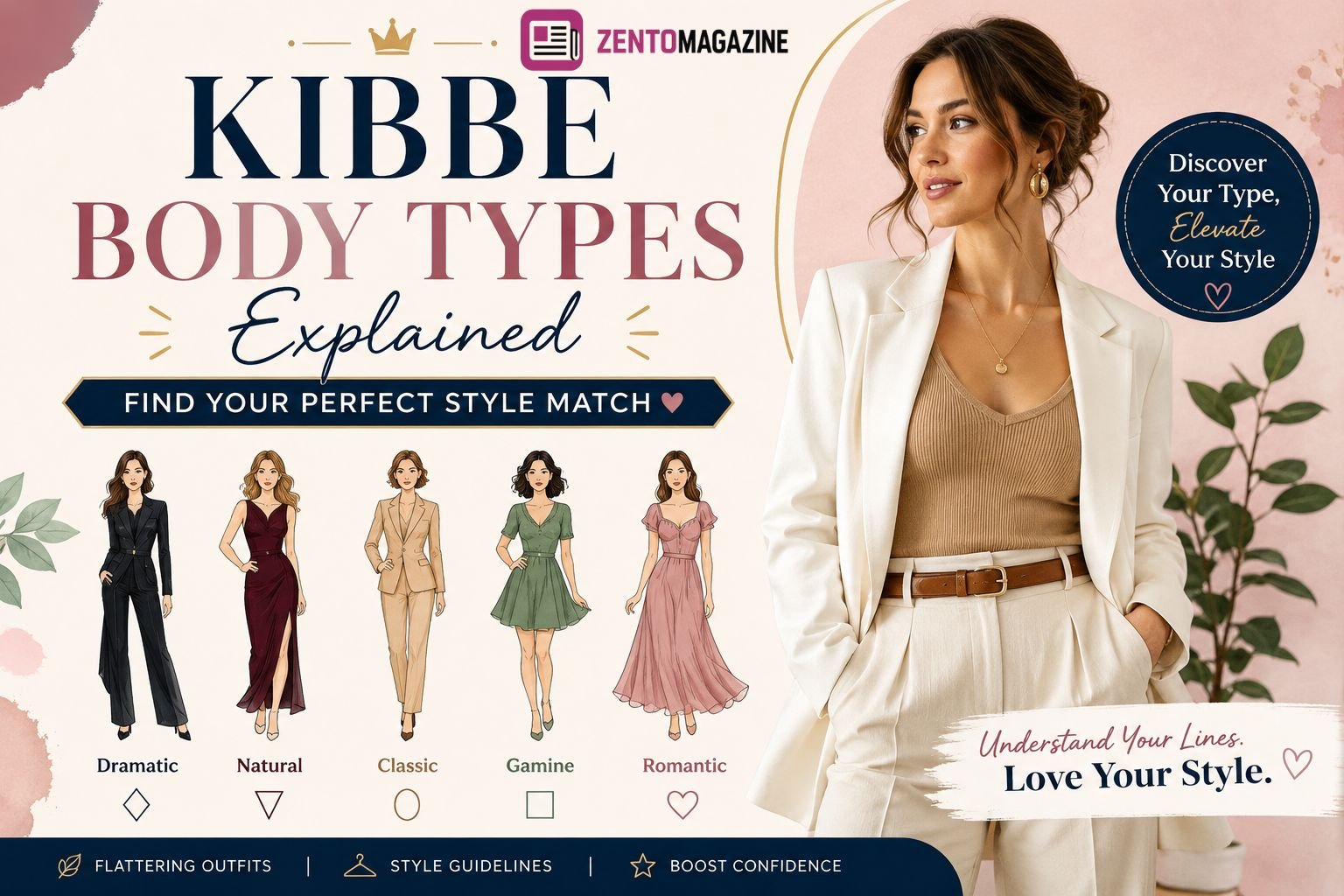
Although there are 13 Kibbe body types, they are usually grouped into five main families: Dramatic, Natural, Classic, Gamine, and Romantic.
The Dramatic family is yang-dominant. It has sharpness, length, and strong structure. The Natural family has broader, relaxed yang with width and openness. The Classic family is balanced, moderate, and symmetrical. The Gamine family has contrast, energy, and a mix of yin and yang. The Romantic family is yin-dominant, with softness, curve, and rounded beauty.
These five families make the system easier to understand. Once you know the family, you can explore the exact type more clearly.
Dramatic
Dramatic is the sharpest and most yang Kibbe type. People in this type often have a long vertical line, narrow bone structure, sharp facial features, and a sleek overall appearance. Their beauty is bold, elegant, and striking.
Dramatics usually look best in clothing with clean lines, strong tailoring, long silhouettes, and minimal detail. Straight trousers, long coats, structured dresses, sharp blazers, and sleek monochrome outfits can work beautifully.
Soft, overly delicate, or frilly clothing may not support this type as well because it can look separate from their natural structure. Dramatic style works best when it feels powerful, clean, and refined.
Soft Dramatic
Soft Dramatic combines strong yang structure with noticeable yin softness. This type often has a long vertical line but also has curves, fullness, or a more glamorous softness. The result is bold but sensual.
Soft Dramatics often look beautiful in long, flowing shapes that still keep drama. Draped dresses, bold necklines, luxurious fabrics, and waist emphasis can work well. Their clothing should not be too plain or too small in detail.
This type can carry glamour naturally. Oversized details, rich textures, and sweeping lines often feel right, as long as the outfit keeps shape and elegance.
Flamboyant Natural
Flamboyant Natural has strong yang, but it is broader and more relaxed than Dramatic. This type often has width in the shoulders, a strong frame, and a natural, effortless presence. The beauty here is confident, free, and bold.
Flamboyant Naturals often look great in relaxed silhouettes, open necklines, long layers, textured fabrics, and slightly oversized pieces. They can handle casual drama very well.
Clothing that is too tight, too fussy, or too delicate may feel restrictive. This type shines when outfits look easy, confident, and slightly undone in a stylish way.
Natural
Natural is a balanced type within the Natural family. It usually has a relaxed frame, moderate width, and an easygoing appearance. The look is fresh, casual, and grounded.
Natural types often suit simple cuts, relaxed tailoring, soft structure, and natural fabrics. They look good when clothing allows movement and does not feel too formal or stiff.
The original Natural category is less commonly discussed today than some other types, but its style idea remains useful: ease, openness, and relaxed shape.
Soft Natural
Soft Natural blends the relaxed width of the Natural family with extra yin softness. This type may have slightly broad shoulders or a natural frame, along with curves or soft flesh.
Soft Naturals often look best in clothing that is relaxed but shaped. Soft draping, waist definition, open necklines, and gentle fabrics can be very flattering. The outfit should not be overly tight, but it should not hide the body either.
This type often looks beautiful in approachable, feminine, and effortless styles. The best outfits feel comfortable but still polished.
Dramatic Classic
Dramatic Classic is mainly balanced but has a slight yang influence. This type often looks symmetrical and moderate, with a bit of sharpness or structure. The appearance is polished, refined, and elegant.
Dramatic Classics usually suit tailored clothing, clean lines, smooth fabrics, and slightly sharp details. Blazers, fitted coats, straight skirts, and simple dresses can work very well.
Too much softness, oversized clothing, or heavy decoration can disturb the balance. This type looks best when the outfit feels neat, controlled, and quietly powerful.
Classic
Classic is the pure balance of yin and yang. This type is moderate, symmetrical, and even. Nothing appears extremely sharp, soft, long, short, broad, or delicate.
Classic style works best with clean, simple, and balanced clothing. Moderate tailoring, smooth fabrics, neat shapes, and timeless pieces usually look very natural.
Because this type is all about balance, extreme trends may overpower it. The beauty of Classic style is calm, graceful, and quietly sophisticated.
Soft Classic
Soft Classic is balanced with a gentle yin influence. This type has symmetry and moderation, but with extra softness in the body or face. The look is elegant, gentle, and refined.
Soft Classics often look best in smooth, graceful clothing with light waist emphasis. Soft blouses, simple dresses, rounded details, and delicate fabrics can work beautifully.
The key is softness without clutter. Too many details, heavy patterns, or oversized shapes can overwhelm the natural balance.
Flamboyant Gamine
Flamboyant Gamine has a lively mix of yin and yang, with more yang sharpness. This type often has contrast, angularity, compact energy, and a bold visual presence.
Flamboyant Gamines can wear cropped shapes, sharp details, color contrast, fitted jackets, playful patterns, and structured pieces. Their style often looks best when it feels energetic and slightly unexpected.
Long, plain, or overly flowing outfits may feel too heavy. This type shines with movement, contrast, and personality.
Gamine
Gamine is a mix of yin and yang with a youthful, sharp, and playful quality. The type often looks compact and animated, with noticeable contrast in features.
Gamine style works well with short lines, fitted shapes, crisp details, and playful combinations. Cropped jackets, slim trousers, neat collars, and bold accents can look excellent.
The goal is not to dress childishly. It is to honor the natural freshness, contrast, and energy of the type.
Soft Gamine
Soft Gamine combines Gamine contrast with more yin softness. This type may appear petite or compact, with rounded features, curves, or a sweet expressive quality.
Soft Gamines often suit fitted shapes with soft detail. Waist emphasis, rounded collars, small prints, short jackets, and playful feminine touches can work well.
Oversized or extremely long clothing may hide their charm. Their best style feels lively, shaped, and softly detailed.
Theatrical Romantic
Theatrical Romantic is mostly yin with a slight yang sharpness. This type is soft, curved, and delicate, but with a touch of sharp drama. The beauty is romantic, detailed, and slightly striking.
Theatrical Romantics often look beautiful in fitted shapes, soft fabrics, ornate details, waist emphasis, and delicate glamour. Their clothing should highlight curve without becoming too heavy.
Plain, boxy, or oversized clothing may not support the natural detail of this type. The best looks feel elegant, romantic, and refined.
Romantic
Romantic is the most yin Kibbe type. It is defined by softness, curve, roundness, and a gentle overall impression. The beauty is lush, feminine, and graceful.
Romantics often look best in soft fabrics, rounded shapes, draping, waist emphasis, and delicate details. Clothing should follow the body’s curves rather than create harsh straight lines.
Stiff tailoring, sharp angles, and boxy cuts may feel too severe. Romantic style works best when it feels soft, graceful, and naturally curved.
How to Find Your Kibbe Body Type
Finding your Kibbe type takes patience. It is easy to focus on one feature, but the system is about the full picture. Your height alone does not decide your type. Your weight does not decide it either. The important thing is your overall balance of sharpness, softness, width, length, curve, and contrast.
Start by looking at your bone structure. Notice your shoulders, hands, feet, vertical line, and general frame. Then look at your body flesh. Do you appear more straight, soft, muscular, rounded, or balanced? Finally, consider your facial features and overall impression.
It can also help to look at photos of yourself in different outfits. Notice what looks natural and what feels forced. Do sharp lines flatter you? Do soft fabrics bring out your features? Do relaxed shapes feel better than fitted ones? Your wardrobe can give useful clues.
Common Mistakes
One common mistake is treating Kibbe like a strict body quiz. Many online quizzes simplify the system too much. They can be fun, but they may not give an accurate result.
Another mistake is confusing weight with type. Weight can change, but your bone structure and natural lines usually stay the same. A person does not become a new Kibbe type simply because they gain or lose weight.
People also compare themselves too much to celebrities. Celebrity examples can help, but they are not perfect. Lighting, styling, surgery, camera angles, and personal branding can change how someone appears.
The best approach is to use the system as a guide, not a prison. Your Kibbe type should help you enjoy fashion, not make you feel limited.
Style Tips for Beginners
If you are new to Kibbe body types, begin slowly. You do not need to replace your whole wardrobe. Start with one or two changes. Try a neckline, jacket shape, dress length, or fabric that matches your suspected type.
Pay attention to how the outfit feels on your body. Does it make you look more balanced? Does it feel natural? Do you feel more confident? These small observations matter.
Also remember that personal taste is important. Kibbe can guide your lines, but it should not erase your personality. You can still wear your favorite colors, trends, and aesthetics. The key is adapting them to your natural shape.
Modern Fashion and Kibbe
Some people think the Kibbe system is old-fashioned because it began in the 1980s. However, the basic idea can still work with modern fashion. The system is not about copying vintage outfits. It is about understanding line, shape, fabric, and balance.
For example, a Dramatic can wear modern minimalism beautifully. A Soft Natural can wear relaxed street style with soft shape. A Romantic can wear modern feminine pieces with curve-friendly cuts. A Flamboyant Gamine can make bold, cropped, high-contrast trends look fresh.
Modern style becomes easier when you understand what to adjust. You may choose the same trend as someone else, but wear it in a way that fits your own lines.
Final Thoughts
Kibbe body types offer a thoughtful way to understand personal style. They move beyond simple body labels and focus on harmony between your natural features and your clothing. When used well, the system can make fashion feel less confusing and more personal.
The most important lesson is this: your body does not need to be corrected. Your style should work with you, not against you. Whether you are Dramatic, Natural, Classic, Gamine, Romantic, or somewhere within these families, your type has its own beauty.
Finding your perfect style match is not about following rules perfectly. It is about learning what makes you feel comfortable, confident, and fully yourself.
Frequently Asked Questions (FAQs)
What are Kibbe body types?
Kibbe body types are a style classification system created by David Kibbe. The system helps people understand their natural body lines and choose clothing that complements their unique features.
How many Kibbe body types are there?
There are 13 Kibbe body types grouped into five main families: Dramatic, Natural, Classic, Gamine, and Romantic. Each type has its own style recommendations and characteristics.
Can my Kibbe body type change over time?
No. Your Kibbe body type is based primarily on your bone structure and natural body lines, which remain largely consistent throughout your life. Weight changes do not usually alter your Kibbe type.
Is the Kibbe system the same as body shape categories?
No. Traditional body shape systems focus on measurements such as bust, waist, and hips. The Kibbe system looks at your overall appearance, including bone structure, proportions, softness, and facial features.
Why should I learn my Kibbe body type?
Knowing your Kibbe body type can help you choose more flattering clothing, build a cohesive wardrobe, shop with confidence, and develop a personal style that feels natural and authentic.
