


Bringing a litter of puppies into the world is an exciting experience for any dog owner. Whether your dog’s pregnancy was planned or unexpected, one of the first questions people ask is: how long are dogs pregnant?
The simple answer is that dogs are pregnant for about 63 days on average, which is roughly nine weeks. However, a normal canine pregnancy can range from 58 to 68 days, depending on factors such as breed, litter size, and the timing of conception.
Understanding the stages of pregnancy can help you provide the best care for your dog and prepare for a healthy delivery. In this complete week-by-week guide, you’ll learn what happens during each stage of pregnancy, the signs to watch for, and how to support your dog from conception to birth.
| Label | Information |
|---|---|
| Topic | Dog Pregnancy |
| Main Keyword | How Long Are Dogs Pregnant |
| Average Length | 63 Days |
| Normal Range | 58–68 Days |
| Pregnancy Duration | About 9 Weeks |
| First Signs | Appetite and behavior changes |
| Confirmation Method | Veterinary ultrasound |
| Week 4 Milestone | Pregnancy often confirmed |
| Week 7 Milestone | Nesting behavior begins |
| Week 9 Milestone | Labor may start |
| Puppy Development | Grows week by week |
| Care Focus | Nutrition, exercise, and vet visits |
| Main Goal | Healthy mother and puppies |
How Long Are Dogs Pregnant?
The average dog pregnancy lasts approximately 63 days from ovulation, although many veterinarians consider a range of 58 to 68 days to be normal. Unlike human pregnancies, which last around nine months, canine pregnancies move very quickly.
One reason predicting an exact due date can be difficult is that the breeding date is not always the same as the conception date. Sperm can survive inside the female reproductive tract for several days, meaning fertilization may occur after mating rather than immediately.
Breed size can also influence pregnancy length. Smaller breeds sometimes deliver slightly earlier, while larger breeds may carry puppies a little longer. Litter size may also play a role, as dogs carrying larger litters occasionally give birth sooner than those carrying only one or two puppies.
The most important thing to remember is that a healthy dog pregnancy typically lasts about two months.
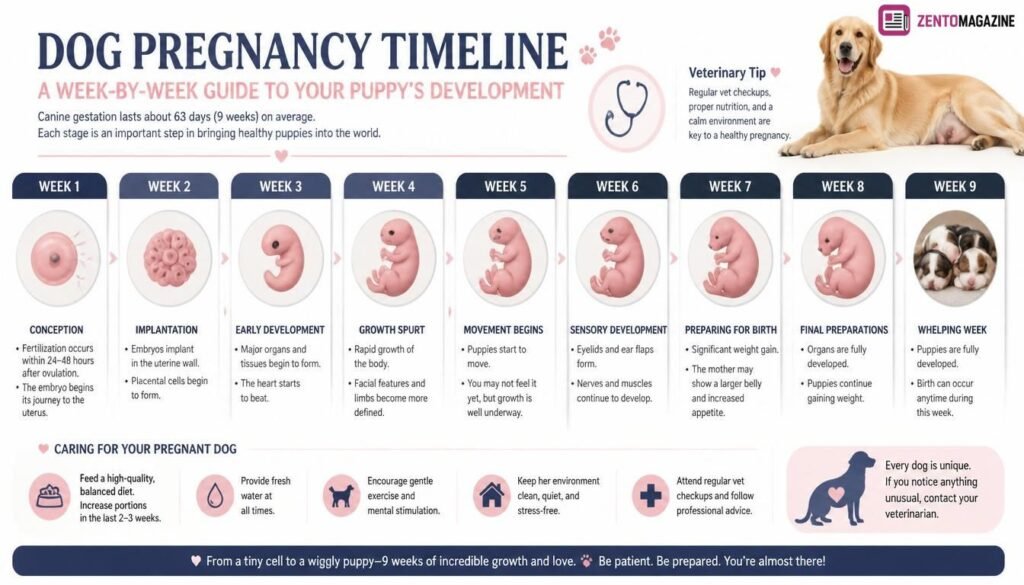
Week 1: Fertilization Begins
During the first week, fertilization takes place after successful mating. Although pregnancy has technically started, there are usually no visible signs that your dog is expecting.
The fertilized eggs begin dividing into multiple cells as they travel through the reproductive tract. At this stage, your dog will generally eat, sleep, and behave exactly as she normally does.
Most owners cannot detect any changes during the first week because all developmental activity is occurring internally.
Week 2: Early Embryo Development
By the second week, the fertilized eggs continue developing into embryos. These tiny embryos travel toward the uterus, where they will eventually implant into the uterine lining.
Again, physical changes remain minimal. Your dog may appear completely normal, and there are typically no outward signs of pregnancy.
This is an important time to maintain a healthy routine. Proper nutrition, adequate hydration, and regular exercise help create a strong foundation for the weeks ahead.
Week 3: Implantation Takes Place
Around the third week, the embryos implant into the uterine wall. This marks a major milestone because the developing puppies now begin receiving nutrients directly from their mother.
Some dogs may start showing subtle symptoms during this period. These signs can include:
- Mild tiredness
- Slight changes in appetite
- Increased affection
- Occasional nausea
Not every dog experiences these changes, so a lack of symptoms does not mean pregnancy has failed.
Because the signs are often mild, many owners still have no idea their dog is pregnant at this stage.
Week 4: Pregnancy Can Be Confirmed
Week four is one of the most exciting periods of canine pregnancy.
The embryos are developing rapidly, and important organs are beginning to form. Veterinary professionals can often confirm pregnancy through ultrasound around this time.
Many dogs begin showing more noticeable signs, including:
- Enlarged nipples
- Increased appetite
- Mild weight gain
- Slight abdominal enlargement
A veterinary examination during this stage is highly recommended. Early confirmation allows your veterinarian to monitor the pregnancy and address any concerns before complications arise.
This is often the first week when owners begin to suspect that puppies are on the way.
Week 5: Rapid Growth Starts
During week five, puppy development accelerates significantly.
The developing puppies begin forming recognizable features such as toes, claws, whiskers, and facial structures. Their organs continue maturing, and growth becomes much more noticeable.
The mother dog’s abdomen may start expanding visibly. Her appetite often increases as her body works harder to support the growing litter.
Nutrition becomes especially important during this stage. Many veterinarians recommend gradually transitioning pregnant dogs to a high-quality puppy food because it provides additional calories, protein, and nutrients.
Proper nutrition now supports both the mother and her developing puppies.
Week 6: Visible Signs Become Obvious
By week six, pregnancy is usually impossible to miss.
The puppies continue growing quickly, and the mother’s belly becomes noticeably larger. She may appear heavier and less interested in strenuous activity.
Common signs during week six include:
- Significant weight gain
- Enlarged abdomen
- Increased sleeping
- Reduced energy levels
- Greater appetite
Many pregnant dogs begin seeking comfortable places to rest more frequently. They may spend longer periods sleeping and avoid activities they once enjoyed.
Owners should continue providing moderate exercise while avoiding overly strenuous activities.
Week 7: Nesting Behavior Begins
Week seven marks the beginning of the preparation phase for birth.
The puppies are now developing fur and continue gaining weight rapidly. Their movements may occasionally be felt through the mother’s abdomen.
Many dogs begin displaying nesting behaviors, including:
- Scratching bedding
- Rearranging blankets
- Seeking quiet areas
- Becoming more protective
This is an excellent time to prepare a whelping area where your dog can safely give birth.
A good whelping space should be:
- Quiet
- Warm
- Clean
- Comfortable
- Free from household disturbances
Providing a designated area early allows your dog to become familiar with it before labor begins.
Week 8: Final Preparations
By week eight, the puppies are nearing full development.
Most of their major organs and physical features have formed. The primary focus now is continued growth and maturation before birth.
The mother dog may become increasingly restless. Some dogs experience temporary appetite fluctuations as the puppies occupy more space within the abdomen.
Common signs during this stage include:
- Frequent nesting
- Restlessness
- Reduced appetite
- Increased urination
- Visible puppy movement
Owners should monitor their dogs closely during this period because labor could begin within the next couple of weeks.
Limiting intense physical activity becomes especially important as delivery approaches.
Week 9: Time for Delivery
Week nine is the final stage of pregnancy.
The puppies are fully developed and preparing for life outside the womb. Labor can begin at any point during this period.
One of the most reliable signs of impending labor is a drop in body temperature. A pregnant dog’s normal temperature is usually between 101°F and 102.5°F. Approximately 12 to 24 hours before labor, the temperature often drops below 100°F.
Additional signs of labor include:
- Panting
- Pacing
- Shivering
- Whining
- Refusing food
- Digging or nesting
Once contractions begin, labor typically progresses through several stages until the puppies are delivered.
Signs Your Dog Is Pregnant
Many owners wonder how to recognize pregnancy before a veterinarian confirms it.
While symptoms vary, several common signs may indicate pregnancy.
Early Signs
During the first month, symptoms are often subtle.
These may include:
- Reduced appetite
- Mild nausea
- Increased affection
- Temporary fatigue
Middle-Stage Signs
As pregnancy progresses, changes become more noticeable.
Look for:
- Weight gain
- Enlarged nipples
- Increased appetite
- Abdominal enlargement
Late Pregnancy Signs
Near delivery, signs become obvious.
These include:
- Nesting behavior
- Visible puppy movement
- Restlessness
- Reduced activity levels
Remember that some symptoms can resemble false pregnancy, so veterinary confirmation remains the most reliable method.
Caring for a Pregnant Dog
Proper care throughout pregnancy helps improve outcomes for both the mother and her puppies.
Nutrition Matters
Nutrition is one of the most important aspects of pregnancy care.
Pregnant dogs require additional calories, particularly during the final weeks. High-quality puppy food is often recommended because it provides increased protein and energy.
Avoid sudden dietary changes unless advised by a veterinarian.
Fresh water should always be available.
Exercise Is Still Important
Although pregnant dogs need rest, moderate exercise remains beneficial.
Short walks help maintain muscle tone and overall health.
Avoid:
- Jumping activities
- Intense running
- Rough play
- Excessive physical stress
As pregnancy advances, your dog will naturally regulate her activity level.
Schedule Veterinary Checkups
Routine veterinary care helps identify potential problems before they become serious.
Your veterinarian may use:
- Ultrasound
- Physical examination
- Blood testing
- X-rays later in pregnancy
Regular monitoring provides valuable information about puppy development and maternal health.
When to Call a Veterinarian
Most dog pregnancies proceed without complications, but some situations require immediate veterinary attention.
Contact your veterinarian if you notice:
- Persistent vomiting
- Severe lethargy
- Vaginal discharge with an unusual odor
- Loss of appetite lasting more than a day
- Fever
- Signs of pain
During labor, emergency care may be necessary if:
- Strong contractions continue without a puppy being delivered
- Excessive bleeding occurs
- Labor stops unexpectedly
- A puppy appears stuck
Prompt veterinary intervention can save both the mother and her puppies.
How to Choose the Right Small Dog Breeds for Your Lifestyle
Common Questions About Dog Pregnancy
How many puppies can a dog have?
Litter size varies widely depending on breed and individual factors. Small breeds may have only one to four puppies, while large breeds can produce eight or more.
Can dogs go past their due date?
Yes. Because conception does not always occur on the breeding date, some variation is normal. However, if your dog significantly exceeds the expected due date, consult your veterinarian.
When can puppy movement be felt?
Many owners can feel puppy movement around weeks seven and eight, especially in dogs carrying larger litters.
Do pregnant dogs sleep more?
Yes. Increased fatigue is common throughout pregnancy, particularly during the later weeks when the puppies are growing rapidly.
Final Thoughts
So, how long are dogs pregnant? In most cases, the answer is about 63 days, although a healthy pregnancy can range from 58 to 68 days.
Understanding the week-by-week development of canine pregnancy allows owners to provide better care and prepare for a successful delivery. From the earliest stages of fertilization to the excitement of welcoming newborn puppies, every week plays an important role in the journey.
By focusing on proper nutrition, routine veterinary care, and a safe environment, you can help ensure that both the mother and her puppies remain healthy throughout the pregnancy and beyond.
